Tuesday, 29 April 2014

WSJ: Chinese Pork Producer WH Group. Scrapped IPO. As Investors Turned Off by WH Group's Overly High Pricing; Underwriters Struggled to Sell Offering

     The Wall Street Journal reports,"a Chinese pork producer scrapped what could have been the world's biggest IPO in a year when investors balked at the high price.
The failed IPO was a blow to WH Group, which just eight months ago bought Smithfield Foods in the biggest Chinese acquisition of a U.S. company so far".
At that time, the landmark deal, and the Chinese company's private equity shareholders, were widely lauded for capturing China's growing appetite for high-quality meat with the purchase of the world's largest hog producer. On Tuesday, however, that marriage of Smithfield and Shuanghui became the latest Asian IPO to face investor distaste, and pulled an IPO that had already been reduced to US$1.9 billion from as much as US$5.3 billion.
At US$5.3 billion, WH's IPO could have been the world's biggest offering since Brazil-based insurer BB Seguridade Participacoes SA 's IPO that raised US$5.7 billion in April 2013, according to Dealogic

U.S. Consumer Confidence eases to 82.3 in April

Consumer Confidence
Released On 4/29/2014 10:00:00 AM For Apr, 2014
PriorPrior RevisedConsensusConsensus RangeActual
Consumer Confidence - Level82.3 83.9 83.0 80.8  to 87.8 82.3 
Highlights
Consumer confidence eased in April but still remains over the key 80 level, at 82.3 in April vs March's upwardly revised 83.9. These readings are the highest of the recovery and follow five straight prior readings under 80.

But there is bad news in the April report and that is the present situation component which fell under 80, to 78.3 and sizably below March's 82.5. This comparison points to weakness for month-to-month consumer sector readings for April including for job readings as the jobs-hard-to-get subcomponent rose a sharp 1.1 percentage points to 32.5 percent. And the jobs plentiful reading is down, to 12.9 percent vs 13.8 percent in March.

The good news in the report is the expectations component which is steady and solid at 84.9 vs 84.8 in March. Those seeing more jobs opening up in the months ahead are up, to 15.0 percent vs March's 14.1 percent, as are those seeing their income going up, to 17.1 percent from 15.3 percent. Nevertheless, those seeing their own income falling rose to 12.9 percent from 11.5 percent.

Gas and food prices have been on the climb but have yet to affect inflation expectations which, like they were in last week's consumer sentiment report, are unchanged, at 5.5 percent for this report.

This report is showing less strength this month in consumer spirits than other readings though the results are still respectable. Yet the decline in the current conditions component is a concern. The Dow is moving off opening highs following today's report. 
Market Consensus before announcement
The Conference Board's consumer confidence index rose to 82.3 in March versus a revised 78.3 in February. The gain was led by strong showings in two subcomponents, expectations for future business conditions and, importantly, expectations for future employment. But the assessment of current conditions actually was down a bit including the very closely watched jobs-hard-to-get subcomponent which rose 6 tenths to 33.0 percent.
Source: Bloomberg

WSJ: Q&A: Youku Tudou CEO On Alibaba Investment

In an interview with The Wall Street Journal, Youku Tudou Founder and Chief Executive Victor Koo said the company held talks with a few companies in parallel, eventually deciding on Alibaba after a series of meetings in Shanghai, Beijing and Hong Kong in recent months. Mr. Koo spoke about how his company will make use of the funds, the rash of recent deals in China’s Internet sector, and the government’s recent crackdown on four American TV shows. The following is an edited excerpt of the interview.
WSJD: What was the motivation for taking the investment from Alibaba?
Koo: When we first really considered a strategic investment, we talked to all potential partners and indicated Youku Tudou is an independently operated company so we were looking for strategic investments to take us to the next step. The strategic investment itself will help us accelerate our progress as well as the whole development of our Internet entertainment media platform.
We’ve been around now for 7 or 8 years and we’re looking at this as an important strategic step to progress us to the next level with financial resources, strategic resources…because we see these opportunities happening around us, we want to leverage the market opportunity that is in front of us.
WSJD: What is Alibaba’s motivation for making more investments into media and entertainment in China?
Koo: From their perspective clearly the whole area of video as well as entertainment media is a growth sector as China moves to a consumer-led economy. This is an area where traditionally they have not focused, and they really felt, that by investing in Youku Tudou they [can leverage that]. I think we have a lot of common vision and common goals in terms of what [the video and entertainment industry] can be in China.
For example, the U.S. and Europe have a very developed media entertainment business, but in Asia you look at Korea for example, it’s a relatively small country but its culture and entertainment industry has widespread influence in Asia as well as the rest of the world. China has a huge population and a very sizable Internet space…that kind of reach can create a lot of interesting opportunities. With our base, I think whether it’s in terms of content and how it ties with Alibaba’s businesses in terms of commerce, big data, cloud as well as payment, there are a lot of interesting areas we will explore together.
WSJD: What is your view on the recent crackdown by the government on several popular U.S. television shows including “The Good Wife,” which you feature on your site?
Koo: Besides our strength in web-based original content, syndication is also an area where we started global syndication earlier than any of our competitors and have the broadest library here. Overall, what we see is that the regulatory authorities are highly supportive of this and of course there may be isolated incidents or content [that have problems] – that is something that as an industry we need to cooperate and work with under the overall framework here in China. And so we don’t see that as a widespread phenomenon. I think it’s new enough that we’re also having communication [with the government].
WSJD: Whats going on in Chinas Internet sector now with all these big deals?
Koo: I’ve recently talked about the 20 years of the Chinese Internet, in my view there are a couple of inflection points in these 20 years and 2013 and 2014 is definitely one of those inflection points. I think in five to ten years when people look back [they will see] this is the beginning of the multiscreen age, and mobile Internet and smart TVs, all these things are coming together.
So you’ve seen an acceleration of industry growth as well as an acceleration of strategic cooperation of different forms, investments, partnerships, acquisitions, and mergers and so forth. These kinds of strategic tie ups [happen] when you see a market opportunity and a market inflection that has encouraged the key players in the industry to be more open-minded or more proactive in terms of thinking outside the box and being more strategic.
WSJD: How will this affect Youku Tudou’s cooperation with other companies?
Koo:   Youku Tudou has an open cooperation strategy and that will continue to be the case, so we work with a wide variety of screen manufacturers, whether it’s smart TVs or set-top boxes because we have the leading content software service and user base in terms of video.

The Guardian: Who are the Russians on US sanctions list?

"White House implements visa ban, asset freezes and export licence denials on panoply of Russian officials close to Vladimir Putin

Igor Sechin


The most notable name on the list is Igor Sechin, the head of Russia's largest oil company and an ally of Putin's since the early 1990s, when both worked in the St Petersburg mayoral administration. Sechin previously worked as Putin's deputy chief of staff and deputy prime minister and is considered to be a leader of the conservative bloc within the Kremlin.
Since taking over Rosneft, he has cultivated contacts with western investors, and the news of his sanction could raise questions about a joint venture between Exxon Mobil and Rosneft to develop Arctic oil fields. BP holds a 19.75% stake in Rosneft. A spokesman said the company was "committed to our investment in Rosneft".

Vyacheslav Volodin

Widely believed to be in charge of the regime's internal political strategy, Volodin, a career bureaucrat, was an MP and high-ranking member of the ruling United Russia party. According to the US Treasury Department statement accompanying the sanctions, "Putin's decision to move into Crimea is believed to have been based on consultations with his closest advisors, including Volodin".

Sergei Chemezov

CEO ROSTEC

Chemezov and Putin first became friends when they lived in the same apartment complex in East Germany in the 1980s. Chemezov previously worked in the presidential administration and now heads of the tech industry state corporation Rostec, which was was created in 2007 to consolidate the management of Russian industry and now controls or has stakes in hundreds of companies.

Dmitry Kozak

Deputy prime minister
A Kremlin loyalist who has worked with Putin since the beginning of the Russian leader's political ascent, Kozak is a lawyer by training who, like Putin, worked in Soviet intelligence and then the St Petersburg mayoral administration. He is known as a specialist in handling sensitive Kremlin projects: the deputy prime minister served as Putin's point man on the Sochi Olympics and was put in charge of Crimea's development after Russia annexed the peninsula last month.

Oleg Belavencev

Putin's envoy to Crimea
A former vice admiral in the Russian navy who was deported from the UK in 1985 on suspicion of spying, Belavantsev was recently named presidential envoy to Crimea and appointed to Russia's security council.

Eveniy Murov

Director of Russia's Federal Protective Service
An army general and veteran of state intelligence agencies since 1971. As head of the federal protection service, he oversees the security of the country's leadership.

Aleksei Pushkov

United Russia MP
Chair of the international affairs committee in the Russian Duma, or lower house of parliament, representing the pro-Kremlin United Russia party and a leading voice on Russia's foreign policy".

Monday, 28 April 2014

China Stock Index Rebounds From Biggest Loss in Seven Weeks

China’s benchmark stock index rebounded from the biggest loss in seven weeks after Ping An Insurance (2318) (Group) Co. posted a jump in profit and a gauge of small-company shares halted a six-day slide.
Ping An Insurance, the nation’s second-biggest insurer, climbed 1.8 percent after first-quarter profit rose 46 percent. Leshi Internet Information & Technology Co. advanced 2 percent as the ChiNext index snapped a six-day, 8.7 percent slide. China Petroleum & Chemical Corp. (386), Asia’s biggest refiner, and China Vanke Co. (000002), the biggest-listed Chinese developer, slid at least 2 percent after they reported a decline in net income.
The Shanghai Composite Index (SHCOMP) rose for the first time in five days, adding 0.3 percent to 2,008.99 at 10 a.m. local time. The index lost 3.3 percent over the previous four days on speculation new share sales will divert funds. The total number of Chinese companies seeking initial public offerings has climbed to 144 after 22 more prospectuses were posted on the website of the securties regulator yesterday.
Source: Bloomberg

WSJ: Morning Brief Asia: No Comfort in Dow’s Gains

        The WSJ reports,"If you want to feel good about the gains in the U.S. stock market today, go right ahead. The Dow added 87 points, and at 16449, is only about 0.8% off from its all-time high (16576.66, for the record).
But that closing number completely masks what was a far more unbalanced session. The Dow opened up as much as 139 points, before surrendering the whole thing and falling as many as 49 points. It recovered in the afternoon to close high. That kind of mid-session bipolarity is not a reassuring sign. The other indexes reflect that: the S&P 500 was up a far more modest 0.3%, and the Nasdaq Composite was essentially flat. Meanwhile, the Russell 2000 was down 0.5%.
Sure, the market’s a bit jittery over the headlines coming out of the Ukraine. But we continue to see the markets struggling to  make headway at these levels, and as evidenced by the moves in the Nasdaq and Russell, tech stocks in particular are struggling (except for Apple, which suddenly seems to have some life to it).
The big news on Monday was Pfizer’s attempt to wrestle a deal with AstraZeneca, with the latter demure about the odds of a $100 billion deal. Whether the U.K. company is angling for a better, or truly doesn’t want to do a deal, this story’s got a few more chapters to play out to be sure".

FMI: 5.4% economic growth forecast for Asia in 2014

Economic growth in Asia is projected to remain steady at 5.4 percent in 2014 and 5.5 percent in 2015, the International Monetary Fund (IMF) said in a report published on Monday.
External demand is set to pick up alongside the recovery in advanced economies, and domestic demand should remain solid across most of the region, said the IMF's Regional Economic Outlook for Asia and Pacific.
Entitled "Sustaining the Momentum: Vigilance and Reforms", the report said that the region has strengthened its resilience to global risks and will continue as a source of global economic dynamism.
Provided it stays the course on reforms, Asia is well positioned to meet the challenges ahead and to secure the region' s position as the global growth leader, the report said.
"Asia will continue to remain the most dynamic economy in the world even if its performance is not as stellar as it used to be a few years ago," said Chang Yong Rhee, Director of IMF's Asia and Pacific Department.
This year in particular, Asia will be able to capitalize recoveries of the advanced economies and its performance will be improved, he said in a video interview published on the IMF's official website.
Despite the growth momentum, the IMF report warned that Asia will face higher interest rates and potential bouts of capital flow and asset price volatility with the expected upcoming tightening of global liquidity and Asian economies' external risks of a sudden tightening of global financial conditions.
Since about a year ago when market participants abruptly revised their expectations of the U.S. Federal Reserve tapering, policymakers in Asia have taken actions to address vulnerabilities which have started to bear fruit.
For instance, India, Indonesia, and other Asian emerging markets were able to better weather the bout of global financial volatility in January, the report said.
In addition, the report pointed out that Asia also faces several risks originating from within the region.
Due to financial sector vulnerabilities and the temporary cost of reforms along the transition toward a more sustainable growth path, a sharper-than-envisaged slowdown in China would have significant adverse regional spillovers.
In Japan, there is a possibility that Abenomics-related measures could prove less effective in boosting growth than envisaged unless strongly supported by structural reforms.
Domestic and global political tensions could also create trade disruptions and weaken investment and growth across the region. In some frontier economies, high credit growth has led to rising external and domestic vulnerabilities, the IMF report said.
Growing regional integration is propelling Asia's growth but could also amplify the impact of global and regional shocks. Financial integration in Asia lags well behind trade integration, but it is still capable of exacerbating cycles during negative global events.
The report cited events over the past year as a reminder of Asia's exposure to policy decisions in advanced economies, and warned that Asia is twice as exposed as other regions to growth shocks originating from China.
Chang Yong Rhee said the IMF this time gave a more tailormade policy recommendation to Asian economies.
In China, dealing with credit loss and shadow-banking problem should be priority. In Japan, continuing its structure reform is essential. Inflation in India and Indonesia is still high, and anchoring inflation expectation is an important policy challenge, according to the director.
Some frontier economies with large budget deficit need to address fiscal consolidation to stabilize the market, Rhee said.
The IMF report also suggested that policymakers in Asia need to seek out ways to maximize the growth benefits while preparing to manage the vulnerabilities arising from the expanding channels for spillovers.

China customs confiscate 20,464 batches of fake goods

China's customs said on Monday that they confiscated 20,464 batches of goods last year, including about 76 million articles suspected of breaking intellectual property rights (IPR) laws.
Among the articles, 98 percent involved violation of right to the exclusive use of a trademark, the General Administration of Customs said.
Almost all of the items, 99.4 percent of them, including tobacco, hardware, cosmetics, garments and shoes, and automobile components, were confiscated by the administration as they are being exported, it added.
Confiscated sports equipment, digital storage devices, mechanical and electronic products and communications equipments were high compared to the previous year, the administration said without giving specific figures.
The administration confiscated 673,000 pills in 2013, up 570 percent from 2012, it said.
Source: Xinhua

China: Third party mobile payment thrives

The total trading volume of the third party payment business rose 43.2 percent year on year to 17.9 trillion yuan (2.9 trillion U.S. dollars) in China last year, the China Securities Journal reported Monday.
The country's third party mobile payment market also grew as transactions exceeded 1.2 billion yuan, up 707 percent year on year, according to a report by the Institute of Finance and Banking under Chinese Academy and Social Sciences.
The People' s Bank of China (PBoC) suspended code-based payments and virtual credit cards on March 14, and set a limit on the size of third party payments, bringing discontent to some financial quarters, according to the Journal.
Fan Shuangwen, deputy director of payments and settlements at PBoC said the limit guaranteed security rather than restricting consumption.
Limits maintained transparency in the process and prevented money laundering, Fan added.
Guo Tianyong of Central University of Finance and Economics, questioned the need for a limit if the third party payment guaranteed compensation against capital lost.
Yang Tao of the Chinese Academy of Social Sciences, suggested risk measurement as a focus for future work.
"Third-party systems can only be evaluated through risk measurement, rather than qualitative analysis based on subjective perception," Yang said.
The risk measurement identifies the type and source of risks, analyzes and copes with those risks, and promises public disclosure, Yang added.

China: Overcapacity, slowdown bring steel industry losses

Overcapacity, excess supply and sagging prices have taken Chinese steel companies from profit to loss in the first quarter, and the problems are set to get worse.
More than 45 percent of steel companies reported losses as growth hit an 18th month low of 7.4 percent.
Total losses stood at 2.33 billion yuan (380 million U.S. dollars) against almost 8 billion yuan of profits in the same period last year, according to Monday's report by the China Iron and Steel Association (CISA).
"The first quarter of 2014 was the most difficult quarter since the start of the century," said CISA vice president Zhang Changfu at a press conference in Beijing. Seasonally low consumption means steel firms find themselves in the doldrums.
At the end of March, inventories amounted to 19.4 million tonnes, over 43.5 percent up on the start of the year, intensifying worries. Prices have flagged.
The China Steel Price Index stood at 94.83 at end of March, down 11.28 percent year on year, and 1.7 percent from a month ago. The average transaction price fell 10.14 percent year on year.
Despite weak demand, output kept rising, though less quickly than a year ago. Crude steel output in the first quarter stood at 203 million tonnes, up 2.4 percent; output rose 5.3 percent to 2611 million tonnes. Total sales revenues stood at 869 billion yuan, down 0.79 percent year on year.
According to a government work report in March, 27 million tonnes of production capacity must be cut in the sector this year, but things have not gone entirely to plan. The government placed strict controls on new steel production last year, but new projects are still carried out.
"And this is worrying," Zhang said.
Inventory growth was also fueled by private investment. Private fix-asset investment totalled 71.6 billion yuan in the first quarter, up 6.65 percent year on year. Capacity increased by 90 million tonnes in 2012 and 40 million tonnes in 2013. Despite the reduction, investment remains high.
Government data shows the top 10 steel firms only producing around 40 percent of the nation's crude steel, and the proportion is declining. Mergers and acquisitions among steel firms are badly needed to both improve competence and manage output.
"To break the vicious circle, firms must turn their attention to product quality and categories, with a view to low carbon, environmentally friendly products," said Zhang Lin, a researcher at lgmi.com, a leading Chinese e-commerce service for the steel sector.
Source: Xinhua

Chinese steel firms report severe Q1 losses

 More than 45 percent of China's steel companies reported profit losses in the first quarter of 2014 as an economic slowdown and seasonally low consumption pushed down prices, new data showed on Monday.
Total profit losses stood at 2.33 billion yuan (378.46 million U.S. dollars) in the first quarter, compared to almost 8 billion yuan in profits in the same period last year, according to a report released by the China Iron and Steel Association.
Despite the weak demand, output still increased during the period, which further exacerbated the oversupply that pressed down prices, the report said. According to the report, "the first quarter of 2014 was the most difficult quarter for steel firms since the start of the new century."
First-quarter crude steel output stood at 202.7 million tonnes, up 2.37 percent, while output of steel products rose 5.3 percent to 261.41 million tonnes, the data showed. However, the rate of growth for both declined sharply from a year ago, the report said.
Total sales revenues of steel companies stood at 868.89 billion yuan, down 0.79 percent year on year, according to the report.
Source: Xinhua

Patronizing Alibaba's Chairman Jack Ma?


Alibaba and UCWeb team up to make another Chinese search engine, this time on mobile

shen ma
Chinese ecommerce giant Alibaba and mobile developer UCWeb today announced their latest joint venture: mobile content search. The two companies have created a mobile search engine for apps, shopping, and ebooks, in addition to the more traditional search model. The development of Shen Ma actually began in July of last year. Sina Tech reports Alibaba owns 30 percent of the new search engine and UCWeb owns 70 percent. Last October, Alibaba invested US$50 million in US-based app search engine Quixey, showing company’s growing interest in mobile search. UCWeb CEO Yu Yongfu says the amount of mobile search queries will surpass PC search by the end of the year. It’s unclear so far exactly how Shen Ma will be integrated into UCWeb’s other products, such as UC Browser, which now has over 500 million active users worldwide.

Future developments for Shen Ma include voice search and image search. Mobile content search is a growing vertical as users spend less time on mobile browsers and more time on their apps. We’ve seen companies like China’s Wandoujia, one of the country’s most popular app stores, shift toward the same direction.

Source: TECHINASIA

China's Meitu Releases A Self-portrait Smartphone Meitu Phone 2

Meitu Phone2 pic

Targeting at female selfie-lovers, Chinese photo editing and sharing app developer Meitu launched the second generation of its photography-focused smartphone, one year after launch of the first generation product Meitu Kiss Phone. At the launching event, the company also released an Android-based system MeiOS and a short video app MeiPai.
The selling point of the phone is 13M front/rear camera. Featuring a 4.7-inch screen, Meitu Phone 2 is powered by MeiOS, Fujitsu Milbeaut image processor and MT6592 octa-core processor. The smartphone will be sold at 2,199 yuan (around $ 350) for 16G version, 2,399 yuan for 32G version and 2,999 yuan for a limited version.
Taking the helm of Meitu almost one year ago, Cai Wensheng, a legendary angel investor in Chinese tech industry, adopted for the company a strategy similar to Xiomi’s – to gain users with comparatively good-value-for-money smartphones, build ecosystem with software and make profits from consumer-facing paid services and business-facing offerings. Like Xiaomi’s MIUI, Meitu released a homegrown operating system MeiOS to complement its product portfolio.
As of April this year, the company has 17 photo-centered apps and PC-based tools, including several popular ones of Meituxiuxiu, Meitukankan, etc. Meitu now claims around 740 million registered users, of which 422 million come from mobile terminals, while the number of daily active users stands at around 23.58 million.
Source: TechNode

As the Game is Getting Bigger, Tencent Writes the Largest Asia Technology USD Bond

Chinese tech giant Tencent Holdings Ltd has completed a $2.5 billion dual-tranche bond sale in the US on April 22, making it the firm’s largest U.S. debt deal to date. This is also the largest ever tech bond from Asia (ex-Japan) and the largest offshore bond sale by Chinese companies that are not state-owned.
The deal is part of the companies medium-term notes (“MTN”) program established earlier this month to enabling it to issue up to $5 billion in bonds over the next year, providing a more flexible financing scheme for its potential buyouts in the further. The deal splits into 3-year and 5-year tranches.
According to a source close to the deal, one of the key objectives of the MTN program is to attract US investors, particularly long-term buy-and–hold asset managers. Luckily, the holistic marketing efforts of Tencent in the past few months has largely paid off, with 2/3 of the 5-year bonds sold to US-based funds, and 80% of the smaller 3-year deals.
Tencent, which operates the popular WeChat mobile messaging app, is known for its dominant position in China for messaging, gaming, social networking and e-commerce portal. According to Dealogic, Tencent has already made 9 acquisitions this year, including acquiring stakes in e-commerce site JD.com, South Korean games maker CJ games, and logistic company China South City. It is believed that Tencent’s acquisition binge is to compete with its domestic rivalAlibaba and expand to overseas markets at full speed. Together with the bond issuance, it is most certain that Tencent will keep engaging in a more holistic expansion plan globally.
The bond issuance comes at a time when Chinese firms are not only increasingly looking to overseas investors for funding needs, but also planning out a more globalized strategy. However, breaking out of China brings many levels of challenges for local Chinese tech companies. Tencent has been trying to expand WeChat to the US market with various promotional campaigns that have cost more than $200 million as of the end of 2013, including opening a U.S. office and a TV commercial starring football star Lionel Messi to be aired in 15 countries.
Tencent also announced back in January its arrangement with Google, which rewards a $25 Restaurant.com Gift card to users who connect their WeChat accounts with Google accounts and add five contacts.
Industry insiders believe that this is a step in the right direction, however monetized rewards alone won’t be an incentive strong enough to acquire a reasonable market share. Functionalities that are tailor made to overseas users are of the key components needed to attract attention.
The strong financial position of Tencent is one of the reasons that its US bond has received an A- credit rating by Standard & Poor’s. As of the end of 2013, Tencent achieved annual revenues of $10 billion, leaving a $2.9 million free cash flow and a total gross profit over $1 billion.
Source: TechNode

China's Ctrip Invests $200 million in LY.com, Becoming Its Second Largest Shareholder

China’s leading online travel service Ctrip announced today it has invested more than USD200 million in cash in LY.com, one of its competitors, becoming the second largest shareholder in the latter. It’s undisclosed what a percentage Ctrip has taken in LY, but rumor says it’s about 30%.
LY.com, formerly 17u.cn, wasn’t well-known in China’s online travel market until recently as it introduced funding from Chinese Internet giant Tencent and would run the flight booking service on Tencent’s flagship mobile app WeChat.
Commenting on the investment, Liang Jianzhang, CEO of Ctrip, points out the LY is a leading player in China’s sightseeing ticket market where has become the battlefield for Chinese online travel services and Ctrip planned to invest heavily in.
Dramatic changes are brewing in China’s online travel market. One week ago LY also announced partnership with eLong, Ctrip’s direct competitor, on hotel inventory and sightseeing tickets. A rumor went so far that Ctrip was in talks with Qunar, the travel search service under Baidu, on potential acquisition.
Source: TechNode

China Southern Airlines swung to a Q1 loss


Knockoffs Thrive on Alibaba's Taobao Critics Say Chinese E-Commerce Giant Needs to Do More About Counterfeit Goods

    The WSJ reports,"the Taobao online marketplace, run by Chinese e-commerce giant Alibaba Group Holding Ltd., is one of the world's largest shopping sites, with 7 million sellers offering 800 million items—ranging from Columbia Sportswear fleece jackets to Dahon folding bicycles.
But there are some hitches: Of the roughly 58,000 folding bikes for sale on Taobao, for instance, up to half are knockoffs or infringe on Dahon's intellectual property, says David Hon, chief executive of the Duarte, Calif., company.
The number of fake Dahons on Taobao has increased 10- to 20-fold in the past two years, Mr. Hon estimates, costing the company a few million dollars in sales each year and forcing it to ramp up its fraud-fighting resources. Dahon now has four full-time staffers and spends about $200,000 a year to monitor and fight counterfeits globally.
"We keep complaining" to Taobao, said Mr. Hon. "The [counterfeiters] stop doing this for a while, and then a few months later, they resurface and open up another store."
Alibaba says it spends more than 100 million yuan ($16.1 million) yearly fighting counterfeit goods—particularly on Taobao, its biggest shopping site, according to a February report filed with the World Intellectual Property Organization.
In the past year alone, Alibaba removed more than 100 million listings suspected of intellectual-property infringement and partnered with Chinese law enforcement on 77 counterfeit cases, leading to the arrests of 51 criminal groups.
In 2012, such efforts helped get Taobao removed from the U.S. Trade Representative's list of "notorious markets" for counterfeit goods.
Yet some foreign brands and analysts say that fakes remain a serious—and in some cases a growing—problem on Taobao, a virtual bazaar where anyone with an ID can set up shop. The issue could raise awkward questions ahead ofAlibaba's $15 billion stock listing in the U.S.
"They will have shareholders who will not want to be associated with a company making its money on counterfeit goods," said Damian Croker, the chief executive of BrandStrike, which monitors fakes for foreign brands on e-commerce sites. Mr. Croker says his clients aren't seeing an improvement in the situation on Taobao.
Alibaba declined to comment for this article, citing its pending IPO. The company's public filings to the USTR and the World Intellectual Property Organization detail the steps it has taken to cut down on counterfeit goods on Taobao.
"Sales of allegedly IPR-infringing goods over the Taobao platform are minimal, and Taobao neither invites nor condones such activity," the company said in a filing to the USTR in September 2012".
Analysts and brands say it is nearly impossible to pin down the scale of the problem on Taobao, due to the massive number of goods for sale and the difficulties of detection and authentication.

Youku Tudou Inc (ADR) Upgraded by Nomura to “Buy” (YOKU) April 28th,2014

Nomura upgraded shares of Youku Tudou Inc (ADR) (NASDAQ:YOKU) from a neutral rating to a buy rating in a research report released on Friday morning,TheFlyOnTheWall.com reports.
Nomura has also taken action a number of other stocks recently. The firm reiterated its neutral rating on shares of Vodafone Group Plc (ADR). Also, Nomura upgraded shares of Lloyds Banking Group PLC (ADR) from a neutral rating to a buy rating.
A number of other firms have also recently commented on YOKU. Analysts at Goldman Sachs upgraded shares of Youku Tudou Inc (ADR) from a sell rating to a neutral rating in a research note on Wednesday, April 16th. They now have a $27.00 price target on the stock. Separately, analysts at Deutsche Bank cut their price target on shares of Youku Tudou Inc (ADR) from $29.00 to $28.00 in a research note on Monday, March 3rd. Two research analysts have rated the stock with a sell rating, three have issued a hold rating and four have given a buy rating to the company. Youku Tudou Inc (ADR) currently has a consensus rating of Hold and a consensus target price of $29.60.
Source: WatchListNews April 28th 2014

WallStreetPR Youku Tudou Inc (ADR) (NYSE:YOKU) Is All Set For New Records April 7th,2014

One of the leading internet television businesses, Youku Tudou Inc (ADR) (NYSE:YOKU) is on its course to acquire greater strengths in the world. With a prestigious third rank in the world, the company is also standing on its esteemed first rank in China. By enabling its huge customer base to have a fast and easy access to its superior-quality video content through numerous devices, Youku strives hard to be at greater heights.
The All-New Youku App has made it to the top 10
The Youku and Tudou brands of this company have been the two hot topics of the recent news. The immense innovativeness and technical skills have made the two internet television video brands the most renowned. Youku Inc. has successfully launched a stunning mobile video app for its enthusiastic customers very recently. Undeniably, its state of the art facilities will give a tough time to its competitors. The company’s most interesting app has been positioned as eighth in the world, besting so many other emerging apps in the market. And, the credit for that goes to the massive number of unique visitors on its app.
Youku Tudou Inc (ADR) (NYSE:YOKU)’s new story has created enough hype among its fans. This newly introduced app has been featured as the third most celebrated app. This impressive ranking has been derived on the basis of the time that the customers have spent on the mobile apps. Youku App is closely following WeChat and QQ on its app race. In the previous month, the users have devoted 44 billion minutes on this app.
New agreements
As Youku seeks to retain its large market share, it has entered into a new contract with another behemoth The Walt Disney Company (NYSE:DIS) No matter what, this fresh deal will enable this recognized internet television company to keep away its giant rivals. Youku is geared up to co-market “Captain America: The Winter Soldier”, a potential smash-hit Hollywood movie. Through its association with a colossal name like Walt Disney, Youku Tudou Inc (ADR) (NYSE:YOKU) has made its course to triumph even stronger.
With these ongoing surprises, a curiosity hovers among the minds that whether this noteworthy internet television brand will keep on adding feathers to its hat in a similar fashion. Indeed, this is an interesting point to speculate!

TECHINASIA: Ecommerce titan Alibaba goes multimedia with $1.22 billion investment in video site Youku

Ecommerce titan Alibaba goes multimedia with $1.22 billion investment in video site Youku
China’s biggest ecommerce company is making a huge investment in the nation’s top video streaming site, it emerged this afternoon. Ecommerce titan Alibaba, along with Yunfeng Capital as an investment partner, is ploughing US$1.22 billion into Youku Tudou (NYSE:YOKU), which runs the Youku and Tudou video sites. The official announcement from Youku states that Alibaba is paying the equivalent of $30.50 per share, which is a premium over the current $24.14 per share that Youku sits at. The $1.22 billion deal is the latest in a line of big-buck investments and acquisitions from Alibaba. In 2013, Alibaba took a more social direction by taking stakes in Sina Weibo and taking its messaging app into battle against WeChat.

Battle for the living room


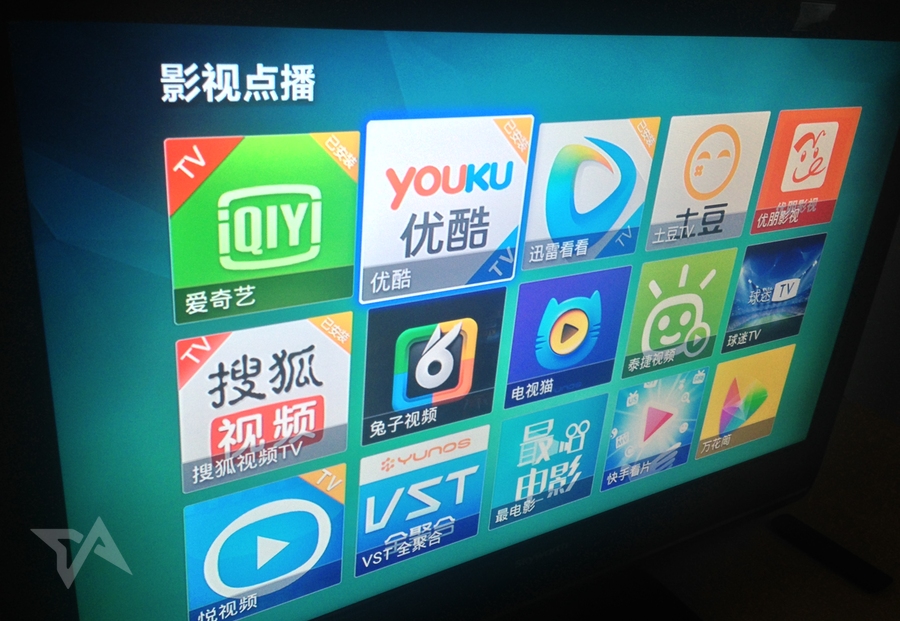
China smart TV apps by video streamin sites
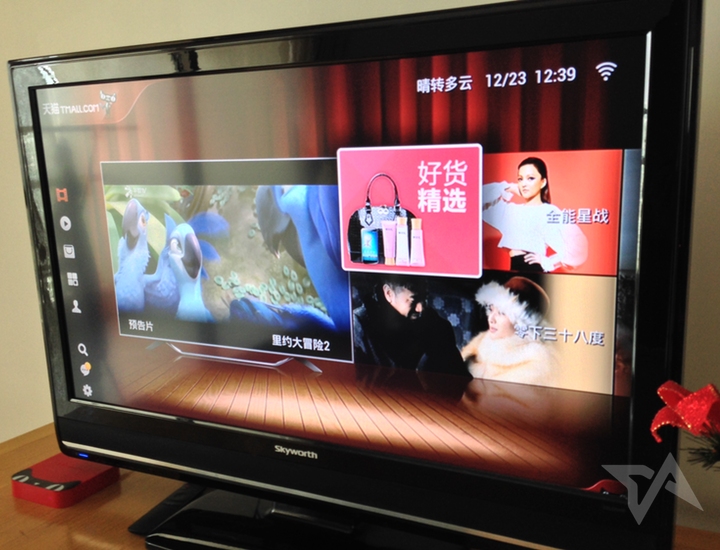
So why Youku? Alibaba’s latest cash-splash is also aimed at being more social, and it additionally gives the eshopping company greater access to consumers on tablets and smart TVs. Alibaba already has its own smart TV OS (pictured top), so the deal with Youku Tudou will likely allow the firm to strengthen its smart TV content in new ways with the video streaming sites. Neither company has revealed any plans at this stage. There might also be opportunities for Youku and Tudou to be integrated with online shopping. Alibaba is plotting its long-awaited IPO to hit US markets, but the firm has yet to file its prospectus publicly with the SEC.

Source: TECHINASIA

China internet stocks plunge as Sohu received Government instructions to remove Big Bang Theory from its website


Dow Jones Newswire

Youku Tudou Announces US$1.22 Billion Investment Led by Alibaba Group

PRNewswire
 Youku Tudou Inc. (NYSE: YOKU), China's leading Internet television company ("Youku Tudou" or the "Company"), today announced that it has entered into definitive agreements with a joint investment vehicle of Alibaba Group Holding Limited ("Alibaba") and Yunfeng Capital, pursuant to which Alibaba and Yunfeng Capital, through the joint investment vehicle, will invest an aggregate of approximately US$1.22 billion to purchase a number of Class A ordinary shares from the Company, which we estimate will be 707,250,870 newly issued shares, and 13,869,990 existing Class A ordinary shares, at a purchase price of US$1.6944 per share, corresponding to US$30.50 per American Depositary Share of the Company, each representing 18 Class A ordinary shares. 
Alibaba and Yunfeng Capital will indirectly hold approximately 16.5% and 2.0%, respectively, of the total issued and outstanding shares of the Company on a fully-diluted basis determined under the treasury method, after taking into account the shares to be issued in the transaction.  The transaction is expected to close in the near future, subject to the satisfaction of customary closing conditions.  Jonathan Lu, Chief Executive Officer of Alibaba, will join Youku Tudou's board of directors upon completion of the transaction. 
"We are very pleased to have Alibaba as our strategic investor.  Alibaba's investment will strengthen Youku Tudou as China'slargest online video platform and further differentiate our services and user experience. It will help us continue to build an immersive cultural entertainment platform that integrates online and offline entertainment," Victor Koo, Chairman and Chief Executive Officer of Youku Tudou, said.
"We are excited to cooperate and work closely with Victor and his team to support their innovation in this key emerging space as well as accelerate our digital entertainment and video content strategy," said Jack Ma, Executive Chairman of Alibaba.  "This is an important strategic initiative that will further extend the Alibaba ecosystem and bring new products and services to Alibaba's customers."
Goldman Sachs (Asia) L.L.C. is serving as Youku Tudou's financial advisor in respect of the transaction. Skadden, Arps, Slate, Meagher & Flom LLP is serving as U.S. legal advisor to Youku Tudou, and TransAsia Lawyers and Maples and Calder are serving as PRC and Cayman Islands legal advisor to Youku Tudou, respectively.
Morgan Stanley Asia Limited is serving as Alibaba's financial advisor in respect of the transaction. Simpson Thacher & Bartlett LLP is serving as U.S. legal advisor to Alibaba, and Fangda Partners and Walkers are serving as PRC and Cayman Islands legal advisor to Alibaba, respectively.
About Youku Tudou Inc.
Youku Tudou Inc. (NYSE: YOKU) is China's leading Internet television company.  Its Youku and Tudou Internet television platforms enable users to search, view and share high-quality video content quickly and easily across multiple devices.  Its Youku brand and Tudou brand are among the most recognized online video brands in China.  Youku Tudou's American depositary shares, each representing 18 of Youku Tudou's Class A ordinary shares, are traded on the NYSE under the symbol "YOKU."

Russia is considering New Tax System for Russian Oil And Gas Companies


Russia*s Stocks Recover on Monday

   Source: WSJ


Popular Posts