Friday, 16 May 2014

The unfolding Ukraine crisis signals a new world order. by Tony Brenton former British Ambassador to Russia

Happily, we now seem to be waking up to the reality that we are dealing not with a revanchist Russia, but with a coldly calculating one – a Russia that is neither patsy nor praying mantis. They don't want to fight a war or take on the economic burden of rebuilding eastern Ukraine, but they do have a minimal list of requirements – Ukrainian neutrality, more autonomy for Russian speakers – which have to be met before they will back off.
Should we concede these points? Ukraine is a big heterogeneous country where provincial autonomy makes sense, and in such a mess that Nato membership is certainly at least decades off. Nevertheless, I regularly hear two quite compelling arguments why we should not. First, if the Russians get what they want this time, they – and by extension others – will come back for more. We cannot let the annexation of Crimea go unpunished. Second, what business does Russia have telling Ukraine how it can govern itself anyway? The world has moved beyond the point where big states can tell small states what to do.
Through the crisis the US has regularly charged Russia with behaving in a "19th-century way". This has provoked a leading Russian commentator to suggest that the time has indeed come for the world to relearn the diplomatic arts of that period. He was right. We are no longer in a world where the west can simply enforce its view. Great power politics is back. No doubt we could have a knockdown, drag-out showdown with Vladimir Putin about Ukraine's right to join Nato. But the result would be a split Ukraine, a lot of economic disruption, an even more aggrieved and destructive Russia, and a further enfeebled world order. The only winners would be the likes of China and Iran. As Henry Kissinger, the arch doer of deals with global pariahs, has noted, "We cannot abandon national security in pursuit of virtue".
The best outcome for Ukraine, and for us, would be an agreement with Russia to get the great powers out, as with Finland during the cold war, and give the country space to turn itself into an economic and political success, which would then be an example to Russia itself. And I am afraid we are going to have to brace ourselves for more such transactions in the future.
Source: theguardian

Chinese Official: Natural gas Deal between Russia and China will be signed

China and Russia have agreed on most of a deal for natural gas delivery and cooperation on other projects. It will be signed during Russian President Vladimir Putin's visit to Beijing next week, a senior Chinese official said on Thursday.
Companies from both sides are finalizing the gas contracts in Moscow, and the aim is to sign them during Putin's visit, Deputy Foreign Minister Cheng Guoping told a press briefing.
Putin will attend a summit of the Conference on Interaction and Confidence Building Measures in Asia from May 20 to 21 in Shanghai. It's his first trip to China since his opposite number, President Xi Jinping, took office.
Russia faces Western sanctions after it incorporated Ukraine's Crimea region this year. Russia is looking to Asian markets to reduce dependency on Europe as a buyer of energy. It's "100 percent" that China and Russia will sign a gas deal, Sergey Pikin, director of Russia's Energy Development Fund, said in late April.
Russia's top natural gas producer, Gazprom OAO, plans to supply China with 38 billion cubic meters of gas annually starting from 2018 and increase it to 68 billion cubic meters. The fuel will be supplied through China's western and eastern pipelines. No timetable has been specified for the increased supply.
A person at China National Petroleum Corp, the nation's biggest natural gas importer, told China Daily that the price of delivered gas is being discussed and has been the stumbling block in talks.
Sun Yongxiang, a researcher with the Development and Research Institute of the State Council, China's cabinet, said the price may be around $400 per 1,000 cubic meters, which is close to Russia's demands.
Source:  ChinaDaily

China Daily: Xinjiang has to prove that the best is West

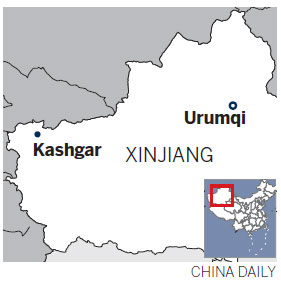
In 2010, the central government decided to establish a Special Economic Zone in Kashgar city in the Xinjiang Uygur autonomous region. The hope is that the city, which has a population of 700,000 - 79 percent of which are members of the Uygur ethnic group - will be able to replicate the success of Shenzhen, China's first and still most-successful SEZ, in the country's less-developed western region.
In the short space of 30 years, Shenzhen, which lies immediately to the north of Hong Kong, was transformed from a fishing village into one of China's wealthiest cities. As part of a pairing assistance program, many of the experts who laid the foundations of that transformation will also be on hand to provide assistance and guidance to the developers in Kashgar.
Bridging the divide
Kashgar prefecture, which includes Kashgar city, is set to become a bridge connecting China with eight countries, including Tajikistan, Afghanistan, Pakistan, and Kyrgyzstan via five land ports. Kashgar city, an important international business hub since the days of the ancient merchants route known as The Silk Road, will become China's only inland SEZ when the preparatory work is completed in 2015.Xinjiang hopes to prove that the west is best
Currently, about 95 percent of the goods that pass through the land ports, in the prefectures of Kashgar and Kizilsu Kirghiz, are Chinese-made export items, such as daily necessities, household appliances and machinery, said Xu Gang, deputy director of Kashgar Prefecture's Port Administration.
Since President Xi Jinping proposed the establishment of the Silk Road Economic Belt in 2013, Kashgar city has been positioned at the forefront of a policy to open up to Eurasian countries, a status helped by the fact that the Pakistan-China economic corridor also begins in the city, according to Mutalif Wubuli, the commissioner of Kashgar prefecture.
In 2013, during a speech in Kazakhstan, Xi proposed that China and the Central Asian countries should build an "economic belt along the Silk Road", a trans-Eurasian project that would target more than 3 billion people and represent the single biggest market in the world - one with unparalleled potential.

Alibaba targets farmland in new project

China's e-commerce giant Alibaba Group Holding Ltd has launched a new project under which farmers can rent out their land online to the company to grow crops, according to Xinhua news agency.
The platform, which has been launched by Alibaba and Zhejiang Xinghe E-commerce Co, will consolidate the cultivated land under an agriculture cooperative. Users of Taobao, an online shopping website, can receive goods from the land that they have subscribed to from the e-commerce company. Apart from the rent the farmers will get, they can also receive salary from the agricultural cooperative if they participate in production.
At present, more than 26.67 hectares of cultivated land has been subscribed by Taobao users. This project, which started in March, began in Jixi, Anhui Province.

Source: ChinaDaily


Architecture: Skyscraper competition winners offer New York population solutions

For its Living Cities competition, Metropolis magazine asked participants for solutions to the housing crisis facing New York. According to the magazine, the city is expected to gain a million more residents by 2040, placing a strain on housing and transport. The winners have now been announced, and include a twisting tower on the High Line and a multi-transport, entertainment and residential hub.
The competition sought designs that were based within the five boroughs of New York, that incorporated a 30-40 story residential tower and that included an, "innovative structural steel system." Participants were also asked to consider sustainability, multi-use strategies, lifestyle amenities and multi-generational design.
Vivo is one of the winners of the Living Cities competition
Vivo was designed and submitted by Andrew Duffin and NBRS+Partners. It reworks the concept of New York's High Line, a redevelopment of the West Side Line railroad that was opened in 1934 before falling into disuse and which has spawned similar projects in places such as Sydney. The concept "engulfs" the High Line and extends it vertically.
"It's a hybrid structural system where the triangulated diagrid system acts as an exoskeleton providing lateral stability and vertical support," explains the Vivo team. "This frees the internal space from needing internal intermediate structure allowing ultimate flexibility for remodeling or use changes over its lifespan. VIVO is alive and responds to the daily and seasonal energy of NYC."
Urban Alloy is a multi-transport, entertainment and residential hub
The second winner was designed by Chad Kellogg, Matthew Bowles and Nina Mahjoub of AMLGM. Urban Alloy is a huge road and rail transport interchange, with the sprawling steel tendrils of the structure appearing to suck in the surrounding train lines and freeways proving a central connecting point for people across New York. In addition to the transport hub, the building also houses residential units and entertainment spaces, made easily acccessible by the transport links.
"Unlike concrete structures that benefit from a very regular floor to floor height because of the need to reuse formwork, steel structures can efficiently be constructed with each unique member cut by an automated system," explains the Urban Alloy team.
Source: Gizmag

-German industry sees "irreparable damage" from Russia sanctions

Europe's showdown with Moscow over Ukraine is already having a major impact on German business in Russia and imposing economic sanctions would cause lasting damage to industry, a confidential paper sent to the German government by a business lobby warns.

The paper from the German-Russian chamber of foreign trade, a group representing 800 companies that provides support to German firms operating in Russia, underscores the extent of concern among German businesses over the Ukraine crisis.

It also suggests industry is stepping up efforts to dissuade Chancellor Angela Merkel's government from pressing ahead with tougher sanctions.

Merkel has warned of more punitive measures against Russia if a presidential election in Ukraine, scheduled for May 25th, is disrupted.

"The growing destabilisation of Ukraine and the diplomatic tug-of-war for a common solution are already having a massive impact on German business in Russia," the two-page "position paper" dated May 7th warns.

"Deeper economic sanctions would lead to a situation where contracts would increasingly be given to domestic firms, projects would be suspended or delayed by the Russian side, and Russian industry and politicians would turn to Asia, in particular China," the paper says.

It says the loss of market share for German and European firms would be "long-term and sustainable", causing "irreparable damage" to Germany's competitive position in Russia.

The paper says this would lead to job losses in Germany and would leave companies vulnerable to "massive compensation" claims if they were forced to break contracts with Russian counterparts.

Source: Reuters

Italy's Renzi says no corrective budget after GDP fall

Italian Prime Minister Matteo Renzi excluded the possibility on Friday of a new cost-cutting corrective budget after economic growth unexpectedly fell in the first quarter of the year.

Renzi, speaking on a morning radio talk show, said the budget had already been passed and that he did not expect further measures. He said Italy must move ahead with more measures to stimulate the economy, which came out of recession last year but remains fragile.

Preliminary estimates from statistics office ISTAT on Thursday showed gross domestic product fell by 0.1 percent in the first three months of the year from the previous quarter and by 0.5 percent from the same period a year earlier

That contrasted with estimates from 27 analysts polled by Reuters, who forecast a 0.2 percent quarterly rise and a 0.1 percent annual fall.

Source:  Reuters

French government announces tax relief as euro election looms

French Prime Minister Manuel Valls, struggling to win back disgruntled voters, said on Friday his government planned to exempt a further 1.8 million households from income tax, at a cost to the state of 1 billion euros ($1.4 billion).

Valls, whose Socialist Party trails opposition parties in voter polls ahead of the May 25 European Parliament elections, said the move would take effect later this year and was aimed at restoring the dwindling purchasing power of consumers.

"It's one billion euros less in tax, one billion euros more in purchasing power for the French, especially the poorest," Valls said on Europe 1 radio.

"It will in large part be financed by clamping down on tax evasion," he said, adding that the government had already budgeted in 500 million euros to help cover costs of the move.

The tax relief may well add to France's already strained public finances as President Francois Hollande struggles to live up to a promise to cut its public deficit to an EU-agreed limt of three percent of economic output next year. That deadline itself was pushed back by two years.

The Socialist government is looking to make 50 billion euros in budget savings over the next three years which are key to keeping the deficit-reduction plans on track.

The International Monetary Fund warned on Thursday that the deficit targets could come under threat if the savings drive gets watered down while the government extends tax cuts to consumers and companies. 

The French central bank said last month the government had to make sure there was no lag between cutting taxes and reining in spending that could endanger the fiscal targets. 

The tax relief for households comes on top of 30 billion euros in payroll tax that the government plans to phase out in the next three years as part of a push to help French companies regain their competitiveness internationally.

Economy Minister Arnaud Montebourg said that at a time when companies were seeing their tax burden eased, it was a question of "social justice" to also help out consumers.

However, the move may also prove electorally astute with opinion polls suggesting that Hollande's Socialists may come out behind both the far-right National Front and the conservative UMP party in the EU parliament elections.

Hollande's government, reshuffled at the start of April after heavy Socialist losses in local elections, is seeking to counter charges by the UMP and National Front that it has pushed taxes higher but failed to reduce a high jobless rate, revive the economy or halt France's industrial decline.

In addition to the income tax relief, the government has sought to defuse anger among state-employed teachers - a major source of votes for the left wing - by pushing back the day teachers must return to work after summer vacation.

Accused by some opponents of surrendering France's trading power and industrial ownership, the government revealed plans on Thursday to expand its veto power over foreign purchases of French firms, extending a list of sectors where it has a say on the grounds that they are strategically sensitive.

Source: Reuters

Modi’s Victory and India’s Change Election

    The WSJ reports,"more than half a billion Indians, a record 66 percent of eligible voters, cast ballots at some 930,000 polling places. Results released Fridayshow the conservative Hindu nationalist Bharatiya Janata Party (BJP) and its controversial leader, Narendra Modi, on course to win more than half the seats in parliament, the first time in 30 years a single Indian party has won enough seats to rule without coalition partners.
India’s 60-year-old democracy may be young compared with the United States–the world’s oldest–but there are parallels between this election and Barack Obama’s first presidential victory.
Both Mr. Modi and Mr. Obama hugely appealed to young voters and ran on a message of change, expanding economic opportunity and making government more responsive.
Indians desperately want economic growth and have grown frustrated with the corruption and incompetence of the ruling Congress Party. Some think tanks have rated this parliament the least productive in India’s history.
And so Indians turned to Mr. Modi, a charismatic campaigner with a compelling story. Born to the lower caste, he is a former chaiwalla (tea seller). In 12 years as chief minister of the western state of Gujarat, he developed a reputation for getting results and fostering economic development, job creation and improving infrastructure.
But Mr. Modi is feared by many Muslims for his alleged role in riots in 2002 in which more than 1,000 mostly Muslim people were killed in Gujarat. He has denied allegations that he did nothing to stop the violence but was denied a U.S. visa in 2005 over the issue".

Portugal exits bailout poorer and long way from recovery

On Saturday, Portugal becomes the second euro zone state after Ireland to exit a bailout, having stuck to the European Union's recipe of belt-tightening to beat the euro zone crisis.

The 78-billion-euro rescue programme the EU and the International Monetary Fund assembled in 2011 for the nearly bankrupt country will formally conclude with Portugal's budget in much better shape and borrowing costs at eight-year lows.

But a shock 0.7 percent drop in its GDP in the first quarter points to the risks inherent in an economic recovery plan which, by focusing on fuelling export growth by cutting labour costs, has become dependent on volatile foreign demand. [ID:nL6N0O139Y]

That data, released on Thursday, also illustrated how far the country is from a lasting economic recovery.

Portugal's central bank highlighted the challenges, saying progress under the bailout was insufficient, and ensuring sustained growth and getting banks lending again would require further reforms.

But as a government no longer dependent on aid looks anxiously ahead to an election in 2015, these may fail to materialise.


INTERNAL DEVALUATION

For those who have lost their jobs or seen their pensions or their salaries cut, life in a post-bailout world raises painful questions: Were the reforms worth it and will they ever deliver enough growth for jobs and better living standards?

Further south in the industrial city of Setubal - one of Portugal's poorest and plagued by high unemployment - there is little evidence of the growth that, before stalling, had returned to the country in the second quarter of last year.

"Levels of poverty keeps getting worse, especially among people aged 25-40 who lost their jobs," said Constantino Alves, a priest who runs a "Social Restaurant" charity for the poor.

"We get young couples, parents with children seeking meals and aid. There are various small entrepreneurs who had shops here and are now in utter poverty, eating here. Many have lost all faith to find jobs. It's a crisis of confidence," he said.

The problem, say economists, is that reforms already implemented during three years of wrenching recession and austerity will only have a delayed impact.

"These are political economies that are very difficult to reform. The only way to change is incrementally," said Antonio Barroso, senior vice president at the Teneo Intelligence consultancy in London.

The government has made it cheaper for firms to hire and fire. That has lowered the cost of doing business and helped bring unemployment down from its 2013 peak of 17.5 percent.

But many observers say that because austerity during the bailout focused overwhelmingly on cost-cutting - like public sector wages and pensions - and tax hikes, deeper reforms that would have reduced the size of the state or made the economy even more export-oriented have not taken place.

"The (bailout) adjustment programme was basically based on internal devaluation," said Antonio Costa Pinto, political analyst at the University of Lisbon.

That has pleased the creditors. Labour costs in Portugal fell eight percent since 2011 to 11.6 euros per hour in 2013, according to EU statistics agency Eurostat. That brought competitiveness gains, with the value of exports rising to 41 percent of GDP last year. 
But the European Commission has said that after wages fell around 5 percent between 2010 and 2013, Portugal is still only half-way to getting pay down to levels that could tangibly reduce unemployment.

"Portugal's challenges remain the same," said Costa Pinto, pointing to the need for further competitiveness gains.


'DESPERATE FOR GROWTH'

That creates a dilemma for a government that will want to give voters some hope before next year's national election.

"This government is looking like it is desperate to go for growth," said Nicholas Spiro, managing director at Spiro Sovereign Strategy in London.

"...It is still a job half done. The danger is that the reforms grind to a screeching halt, there is a very high risk that that happens."

With government bond yields at record lows, market pressure to persist with tough economic reforms has evaporated.

And now that its lenders from the Commission, European Central Bank and IMF have stopped reviewing the economy, the country can change policies more freely, even if still needs to gradually reduce the budget deficit under EU rules.

The government has already said it will partly reverse salary cuts in the public sector in the next few years and it is considering cutting taxes next year. 

"I don't think there is an incentive to continue pushing reforms," said Teneo Intelligence's Barroso. "I think the pressure to cut taxes before the election is huge."

Perhaps that will give a push to growth in the short term, but will it help generate the high growth necessary to sharply reduce Portugal's high debts at around 125 percent of GDP? Or to create jobs for those outside the few fast-growing sectors?

Back in Almada, Capelo still hopes thing can improve.

"At least we still have hope that the data will one day transform into real improvements," she said. "I want to try and get a bank credit this year for the business."

But bank loans to firms and individuals are continuing to decline, dropping to 240 billion euros in February, their lowest since 2007, according to the Bank of Portugal.

"Getting loans from banks is the big problem even for companies that have managed to survive. There are no loans, so it's difficult to buy new merchandise, not to mention expand," said Anabela Sharamia, vendor in a furniture shop in Setubal.

Source: Reuters

EU Peripheral bonds deepen losses amid Greek tax and political fears

Lower-rated euro zone bond prices slipped on Friday, deepening sharp falls on Thursday triggered by nervousness about the stability of the Greek government, a tax on foreign holders of Greek bonds, and weak growth.
The rally in peripheral government bonds had been fairly steady since the start of the year, but some analysts suggested the reversal might be more than a blip.
"There will be some investors that are concerned, and should take into consideration that is not just a one-day movement but something more prolonged," said Daniel Lenz, strategist at DZ Bank.
The yield on Greek 10-year government bonds <GR10YT=RR> was up 4 basis points at 6.87 percent, following a jump of over half a percentage point on Thursday.
Italian , Portuguese and Irish  10-year bonds also rose 4 bps, to 2.73, 3.75 and 3.12 percent respectively, while Spain's were 1 bp higher at 3.02 percent.
Thursday's price falls were largely attributed by traders to a Greek government circular detailing capital gains tax that would apply to non-resident holders of Greek debt between 2012 and 2013.
Greece's government said the document had only sought to clarify that the previous tax regime of 33 percent on foreign legal entities and 20 percent on individuals had been abolished in 2014, although it later withdrew the document.
Strategists said the Greek tax regime could have implications for how governments, desperate to balance their widening budget deficits, may look for future private sector contributions. Italy was quick to deny that it had any plans for a retroactive tax.
"The price action was very telling ... it just showed how fast such a stampede can be generated to avoid any such confiscatory actions," said KCG strategist Ioan Smith.
Others pointed out that double taxation agreements in Europe would exempt many investors from such a tax, adding that the shift in market sentiment was more likely a response to Greece's fragile political situation ahead of European elections.
Expected gains for Greek eurosceptic parties in next week's election might erode domestic support for the ruling coalition and potentially trigger a general election.
In addition, EU economic growth came in much lower than expected on Thursday, weighed down by shrinking output in Italy and Portugal.
The slowdown is increasing pressure on the European Central Bank to ease monetary policy further, with markets now broadly expecting its June meeting to introduce a package of policies, including cuts in all its interest rates and targeted measures aimed at boosting lending to small- and mid-sized firms. 
Until that materialises, strategists say peripheral yields may continue to edge higher. Ireland, however, could get a boost later on Friday, with Moody's scheduled to review it

Source: Reuters

Two deals Alibaba could strike in America

Alibaba boss Jack Ma is busy preparing for a U.S. initial public offering, potentially valuing his company at more than $100 billion. But if he really wants to make it big in America, he may have to buy his way in. There are at least two deals he could strike. Buying Yahoo would tidy up some corporate and tax-related loose ends as well as providing a U.S. bridgehead. The stronger industrial logic, though, could eventually suggest a tilt at eBay .

Ma's goal early on was for Alibaba to become a top-10 internet firm and last 102 years. In 2011, he hinted at interest in Yahoo. At the time, Alibaba wanted to reduce foreign ownership and Yahoo's valuation was depressed. The U.S. search firm's stake is now smaller and its stock richer. Ongoing efforts to make acquisitions in China and take small stakes in U.S. companies with relevant technology, along with going public, may mean Ma has enough on his plate without the financial and political risks of a big American transaction.

Yet making it big in the United States as well as China could well require a trusted U.S. brand. Moreover, Yahoo has a problem. When it sells shares in Alibaba, the Internal Revenue Service takes perhaps 30 percent of the proceeds. Yahoo's current roughly 23 percent stake could be worth $27 billion before tax at a $120 billion valuation for Alibaba. Avoiding a tax hit approaching $10 billion altogether would be a big deal for a company whose own market capitalization is $34 billion.

If Alibaba bought Yahoo, in essence buying back the U.S. company's stake, the tax treatment could be far more favorable. Ma might also gain an extra housekeeping opportunity. Yahoo's other big Asian holding is Yahoo Japan <4689.T>, a joint venture with Masayoshi Son's SoftBank <9984.T>. Some kind of exchange involving that stake and SoftBank's 34 percent of Alibaba could one day help Ma reduce his other big foreign shareholding too.

Yahoo's mostly stagnant business is less compelling. Strategically, Ma's more natural U.S. target would be the $65 billion eBay, with its auctions and e-commerce – and even the PayPal business to go along with Alibaba's sister company Alipay. That would, of course, be a huge bite even if Alibaba's IPO turns out to be a blockbuster. But for Ma to go after his biggest inspiration would surely not be out of line with his ambition.


Source: Reuters

Brazil's economic activity slips in March -central bank

Economic activity in Brazil dropped slightly in March on weaker industrial output and retail sales, central bank data showed on Friday, capping a frustrating first quarter for Latin America's largest economy.

The Brazilian central bank's IBC-Br economic activity index dropped 0.11 percent in March from February in seasonally adjusted terms, the bank said on Friday, in line with expectations in a Reuters poll.

The index, a rough proxy for gross domestic product, dropped a non-seasonally adjusted 0.09 percent over the same month a year ago. It pointed to 0.3 percent growth in the first quarter from the end of last year.

March's surprise drop in retail sales dragged activity down as rising inflation and tighter credit ate into consumers' pockets. Industrial output also fell in that month as factories sought to cut back on unwanted inventories.

Brazil's economy has struggled with weak growth and high inflation since 2011 despite countless attempts by the government of President Dilma Rousseff to boost activity through stimulus measures. The country's economy grew just 2.3 percent last year and is expected to slow further in 2014, according to private estimates.

The IBC-Br index, a gauge of activity in the farming, industrial and services sectors, has proven to be an imperfect barometer of official GDP data compiled by statistics agency IBGE, which provides a broader reading of economic activity.


Source: Reuters

Bill Gross: Drop in Bond yields reflects expectations of a lower Fed lending rate

The rally in U.S. Treasurys that pushed 10-year yields to their lowest level in nearly seven months reflects the likelihood that the Federal Reserve will keep rates low in a slowly growing global economy, according to Bill Gross, chief investment officer at Pimco.
The 10-year note 10_YEAR +0.60%  yield, which falls as bond prices rise, dropped more than 15 basis points to 2.50% in the past three sessions. That move is emblematic of the way interest rates should behave as the world shifts toward the “new neutral” paradigmoutlined by Pimco earlier this week, the bond market veteran told MarketWatch in emailed comments.
“2.50% currently reflects a 0.5% new neutral rate and seems fair for now,” Gross said.
The new-neutral outlook published by Gross and Pimco adviser Richard Clarida suggests that the global economy is transforming from a period of recovery after the financial crisis — termed the “new normal” back in 2009 — toward stability that is characterized by modest economic growth over the next three-to-five years.
With economies expanding more slowly than they did prior to the financial crisis, central banks are likely to keep their key interest rates low, cushioning lending rates from a sharp rise. In the U.S., the fed funds rate is currently anchored near zero, with many traders expecting it to begin rising in the middle of next year . But Gross suggested yields will be dictated by how high the Fed eventually hikes rates. It may stop at a lower point than it did in past rate cycles.

GLOBAL MARKETS-Shares fall for third day on growth worry

Global shares eased for a third day on Friday, on course for their longest losing streak in over a month, and yields on some lower-rated euro zone bonds rose as a gloomier economic picture in Europe led investors to shed riskier positions.

Weaker-than-forecast GDP figures from euro zone countries such as Italy, France and Portugal on Thursday challenged market expectations for an economic recovery in the bloc, which have boosted shares and lower-rated bonds in the region since last summer.

Sharp sell-offs in U.S. indexes, which were set to fall for a third consecutive day, and Japanese shares and a decline in safe haven Treasury yields strengthened the feeling global investors were starting to question a 20 percent rally in global shares since June 2013, which propelled a key world index to 6-1/2 year highs earlier this week.

"There’s a general rotation and fall in risk appetite," said Andrew Parry, chief executive officer at Hermes Sourcecap, which manages 2.4 billion euros ($3.3 billion) worth of assets.

"In Europe...GDP figures yesterday show the recovery is quite modest so far."

The MSCI All-Country World index <.MIWD00000PUS> was down 0.2 percent, falling for a third day and further retreating from 418.24, a high touched on Thursday and previously not seen since Nov. 2007.

The index was trading at nearly 15 times its expected earnings for the next 12 months, the highest valuation multiple since 2009, Datastream data showed.

Shares on Wall Street were poised to open lower, with main equity index futures down 0.1 percent .

Greek and Portuguese 10-year government bond yields rose, hit by nervousness around Greek government stability and weaker-than-expected growth data for Portugal.

"There will be some investors that are concerned and should take into consideration that is not just a one day movement but something more prolonged," said Daniel Lenz, strategist at DZ Bank.

Italian , Spanish and Irish bond yields reversed early advances to trade slightly lower.

Yields on benchmark German bonds , regarded as a safe-haven asset due to the country's strong economy, hovered close to a one-year low while the euro consolidated just above a 2-1/2-months trough against the dollar.

In commodities, gold struggled below $1,300 an ounce after U.S. jobs and factory data indicated brighter prospects for that economy, hurting the metal's appeal as an investment hedge.
Nickel prices rose on Friday, shaking off steep losses from the previous two sessions as investors refocused on shrinking supplies, while copper prices were on track to post their biggest weekly gains in nearly two months on robust demand.

Brent futures rose above $109 a barrel on Friday as tension over Ukraine kept investors on edge, although a gradual return of Libyan oil supply capped gains.


Source: Reuters

Acampora’s ‘sick feeling’ about stocks: Nasdaq could fall 25%

The worst drop in five weeks for the S&P 500  and the Dow industrials and a drive for the Russell 2000 into correction territory has brought out the bears and not just the SALT-y guys in Vegas.
Ralph Acampora, a known stock bull and technical analysis guru, told CNBC on Thursday before markets closed, that he thinks it could get really bad for stocks and that he has a “sick feeling” about what lies ahead.
The director of technical trading at Altaira Investment Solutions predicts the S&P 500, which is up 1.2% for the year so far, will see a 10% drop between now and October. His crystal ball darkens considerably for other indexes
“If you ask me about the Russell  and the Nasdaq Compositeand the S&P MidCap, I think you’re talking about 20, 25%…and I call it a stealth bear market going on,” said Acampora.
He said the “melt-up” that began last December and carried into the first quarter of this year has left stocks like Facebook  and Amazon overextended. That needs to be unwound and markets aren’t even close on that front, he said, saying “it bothered me then, and it still bothers me.”
Source: Marketwatch

Briefing.com: The stock market will be aiming to regroup from Thursday's broad-based selling effort

"The stock market will be aiming to regroup from Thursday's broad-based selling effort, which followed on the heels of some mixed economic data, some nervous-sounding remarks from leading hedge fund manager David Tepper, some weak GDP data out of the eurozone, and another rally effort in longer-dated Treasury securities that dropped the yield on the 10-yr note below 2.50%.

Growth stocks lead the losses in the early going, but by the closing bell it was the blue-chip averages that stood out as the day's weakest performers.  The Russell 2000, which was down as much as 1.9% at one point, battled back to end the day down 0.7% and just above its closing low from early February.  The rebound effort transpired after the early selling pushed the Russell 2000 more than 10% off its high, leaving it in the throes of a technical correction.  Notwithstanding the comeback try, the Russell 2000 still ended the session below its 200-day moving average (1116.73).

The continued weakness in the small-cap stocks, though, looked to have bled into the large-cap issues as there simply wasn't a great deal of buying interest.  Every S&P 500 sector, with the exception of the telecom services sector +0.2%), ended the day lower.

Thus far, there hasn't been a rush to buy the dip.  The S&P futures are off their morning lows, but still remain 0.1% below fair value, suggesting there will be a flattish to slightly lower start on this options expiration day.  The latter is expected to boost trading volume, which has been light for most of the week.  Volume on Thursday's sell-off hit 732 mln shares at the NYSE, which was the heaviest this week and slightly above the recent average.

Not surprisingly, the futures market liked what it saw in the headlines for housing starts and permits. Starts jumped 13.2% in April to a seasonally adjusted annualized rate of 1.072 mln units from 947,000 in March.  The April level is 26.4% above the year-ago level and was ahead of the Briefing.com consensus estimate, which stood at 975,000.

Building permits also produced a positive surprise, rising 8.0% to a seasonally adjusted annual rate of 1,080,000 (Briefing.com consensus 1,008,000).

The offsetting factor in the Housing Starts report is that the bulk of the growth in both starts and permits came from multi-family units, which is a volatile construction sector.  

Permits for single-family units increased just 0.3% to 602,000 while single-family starts jumped 0.8% to 649,000.  Multi-family starts surged 39.6% to 423,000, which is the highest since January 2006. Even so, there is a positive GDP component to the Housing Starts report as the number of housing units under construction rose 2.5%".

The Treasury market's reaction to the starts data was fairly muted.  The 10-yr note was already down three ticks ahead of its release and that is still where it stands, with its yield at 2.50%.  In light of Thursday's big move, added attention will continue to be paid to the Treasury market's behavior as a dictating factor for the stock market.

Thursday, 15 May 2014

Global Growth Worries Climb


         The WSJ reports, "Five years after the financial crisis ended, soft growth in Europe, a stop-and-start U.S. recovery and waning momentum in China have policy makers groping for what to do next.

A spate of worrying economic data Thursday shook stock and bond markets. Economic activity in the 18-country euro zone expanded at a weak annual rate of 0.8% during the first quarter, data released Thursday showed. Excluding Germany, which grew at a robust 3.3% pace, the rest of the euro-area economy contracted slightly during the quarter.
European Central Bank officials are now moving toward enacting additional low interest-rate policies to prevent the region from sliding into a lengthy period of economic stagnation, while the U.S. Federal Reserve guardedly tries to wind down a bond-buying program meant to revitalize economic growth.
Meantime, Chinese authorities are trying to prod banks to lend more to first-time home buyers shut out of their real-estate market. U.S. officials privately say they expect Chinese officials to act to boost their economy and support banks if growth slows severely, though Chinese officials say they will avoid major stimulus if it undermines economic overhauls or deepens credit woes.
Underscoring the sense of angst, stock prices dropped sharply Thursday in Europe and the U.S. The Dow Jones Industrial Average fell 167.16 points, or 1.01%, to 16446.81.
Yields on bonds issued in big developed markets continued to fall Thursday. Yields on German bunds with 10-year maturities sank to 1.307%, their lowest level in a year, while yields on 10-year U.S. Treasury notes fell to 2.498%, the lowest level in six months".

Special Edition 05/14/2014 World Heritage China Part 8- Longmen Grottoes - CCTV News - CCTV.com English

Special Edition 05/14/2014 World Heritage China Part 8- Longmen Grottoes - CCTV News - CCTV.com English

  Sorry for the indirect link to this  excellent documentary of the Longmen Grottoes in China.

China urges Vietnam to ensure safety of Chinese nationals

China's Foreign Ministry has confirmed reports that rioters inside Vietnam have attacked Chinese nationals and property across the country. The Chinese government has urged Vietnam to take responsibility for the issue and safeguard Chinese nationals and their property. Staff from the Chinese embassy in Vietnam are travelling to the areas where the attacks happened to confirm the numbers of casualties and count losses.
"China’s Foreign Ministry will hold an emergency meeting with Vietnam’s Ambassador to China to make a solemn representation, and to urge the Vietnamese side to take effective measures to ensure the safety of Chinese nationals and their property in Vietnam. I have to point out that, the recent violent attacks against Chinese nationals and companies have direct links to the Vietnamese government’s indifference and tolerance of anti-China forces in the country. We urge the Vietnamese government to take responsibility to investigate the attacks, punish the rioters, and provide compensation for the losses. We have said it many times, that the Chinese oil company has been conducting normal operations within Chinese territory." Chinese Foreign Ministry spokeswoman Hua Chunying said.
Source: CCTV

Single-person households in China double in ten years

The size of the Chinese family has been getting smaller in recent years, with single-person households on the rise. According to an official report on family development, the average number of family members in a house was three in 2012, compared with over five in the 1950s. The report attributes the decline to low birth rates, late marriages and population migration.
A smaller family has become the trend in the past decade. From 2000 to 2010, the number of single-person households doubled. The report attributes this to the growing number of unmarried and old people who live alone. In 2010, the number of such one person households with the member aged between 30 and 80 stood at 43.2 percent. The percentage of one person households with the member over 80 years of age stood at 40 per cent in 2010
Source: CCTV

Xinhua: Commentary: Cool heads needed in viewing China's economy

Recent statistics show China's industry, investment and consumer price index grew at a slower pace, but these are temporary fluctuations and no cause for panic as several upbeat signals were easily overlooked amid the gloom.
Every coin has two sides. China's Consumer Price Index increased 1.8 percent year on year in April, much lower than the 2.4 percent in March. But the positive view is that China has no worries about inflation and is in a strong position to keep its interest rates low.
China's producer price index contracted 2 percent in April, following a 2.3-percent decline in March, pointing to low confidence among enterprises. But this was a lag effect reflecting the winter slowdown and should not be read as a sign of the future.
The real estate development climate index dropped 0.61 points from March to 95.79 points in April, its third consecutive monthly decline. But China's central bank responded quickly, urging commercial banks Tuesday to speed up approving and issuing loans to qualified home buyers.
On a positive note, the 8.7-percent year-on-year industrial added value growth reading in April, if sustained in May and June, means gross domestic product (GDP) expansion in the second quarter could be similar to the 7.4-percent pace in the first quarter of 2014.
The purchasing managers' index (PMI) for the manufacturing sector also rose, to 50.4 in April, up from 50.3 in March.
Foreign trade in the first four months of this year saw a moderate increase through policy support and improving exports to major countries, though the global economic situation is gloomy in general.
So the picture is not as gloomy as some foreign media insist.
After robust growth at an average annual rate of nearly 10 percent over the past 30 years, the Chinese economy has expanded into the world's second largest, and is gradually losing its heavy dependence on exports and investment as it pushes for quality and efficiency in its products.
Undoubtedly, economic transformation in any country will take time and take a toll.
As President Xi Jinping said recently, China should adapt to new norms for its economic growth and stay cool-headed about the slowdown, as should other countries.
The Chinese government has released a series of economic reform policies and attached great significance to the prevention of various risks for its economy. It has also taken timely countermeasures to reduce potential negative effects.
The State Council, China's cabinet, issued a key document Friday on promoting healthy development in the domestic capital market. It maps out guidelines for reform, development and supervision of China's stock, bond and fund markets.
The release of the new document, also known as the "New Nine-Article Cabinet Document", marks the birth of a program for protecting the interests of small investors on China's capital market.
On Wednesday, the State Council announced an acceleration in the development of production-oriented service industries in a bid to step up industrial restructuring and support economic growth.
Priority will be given to the development of research and design, commercial services, marketing and after-sales services, and will be driven by the market and innovation, according to an executive meeting of the State Council chaired by Chinese Premier Li Keqiang.
The move is expected to stimulate domestic demand, boost employment and improve people's lives, as well as stabilize economic growth.
It will also help the sector move up the value chain, and prompt integrative development of the country's tertiary, agriculture and industry sectors.
As for foreign trade, Chinese leaders are trying to create new opportunities using their new way of thinking. For instance, Premier Li took railway diplomacy to Africa during a recent tour.
Some economists think similarly, deeming that infrastructure investment will become a main engine for global economic recovery and even prosperity.
People's Bank of China Governor Zhou Xiaochuan said at the weekend the central bank would only fine-tune its policy to counter economic cycles and would not carry out large-scale incentive policies to boost activity.
In a word, China is vigilant about its economic challenges and will not over-react to the pressure of the slowing momentum.
Those books and articles that trumpet the fading of China to boost their sales should stop uttering nonsense and make a fair analysis and judgement of China first.
Source: Xinhua

News Analysis: China to boost production-oriented service industries

China will accelerate the development of production-oriented service industries in a bid to step up industrial restructuring and prop up economic growth.
Priorities will be given to the development of research and design, commercial services, marketing and after-sales services, and will be driven by the market and innovation, according to an executive meeting of the State Council chaired by Premier Li Keqiang on Wednesday.
The move is expected to stimulate domestic demand, boost social employment and improve people's livelihoods, as well as stabilize economic growth, according to the meeting.
Wang Jun, deputy director of the China Center For International Economic Exchanges' consultancy department, said the move indicated the country has started to tap the potential of industrial restructuring to maintain economic growth, rather than direct stimulus to investment and industry.
It will help improve growth quality and efficiency in the long run, he said.
Zhang Zhiqian, researcher with the Investment Research Institute under China Jianyin Investment, also endorsed the move that seeks impetus from structural adjustment, as the dependency on expanding investment would lead to serious side effects including overcapacity and environmental issues.
China's economic growth continued to shrink in the first quarter, as downward pressure still existed. However, the country's rapidly-growing service industry has been emerging as a new engine for its slowing economy.
In the January-March period, China's tertiary sector increased 7.8 percent year on year to 6.29 trillion yuan (1.02 trillion U.S. dollars), making up 49 percent of the country's GDP in the first quarter. Its growth pace was also faster than the 3.5 percent of agriculture and 7.3 percent of the industry sector.
According to the meeting, design and application of new materials, products and techniques will be strengthened. Improvements will be made in information technology and energy saving services, as well as logistics services for manufacturers.
The move will help the sector to move up the value chain, and prompt integrative development of the country's tertiary, agriculture and industry sectors, the meeting said.
"The high-tech production-oriented service industries will accelerate the country's industrial upgrade and prompt 'Made in China' to evolve to 'Created in China'," Zhang said.
In addition, financial services for the manufacturing of construction equipment, delivery vehicles and production line will be promoted, while the country will encourage service outsourcing and the nurturing of high-end talents.
The central government will ease market access to attract social capital to the industries, encouraging Chinese enterprises of the sectors to invest overseas and lifting access restrictions gradually for foreign companies on architectural design, accounting audit and commercial logistics.
Enterprises of research and design, inspection and certification, and energy saving will be allowed tax breaks that have been enjoyed by high-tech companies.
According to the meeting, value-added tax will be promoted to the entire tertiary sector and favorable policies will be introduced to build a sound environment for companies in production-oriented service industries.
In addition, the country will continue to develop service industries concerning daily life, such as health, elderly care and information consumption, in a bid to improve people's well-being and build a new engine for healthy economic and social development.
A draft of the Food Safety Law was approved at the meeting, which requires full supervision, stricter punishment, accountability, increased risk monitoring and improved food safety standards.
The draft is still subject to deliberation of the Standing Committee of the National People's Congress, according to the meeting.
Source: Xinhua

Chinese enterprises' investment in Britain surges

The Chinese enterprises' investment and merger in Britain has reached 4 billion U.S. dollars in the first four months of this year, which exceeded the total amount of last year, a Chinese diplomat said on Thursday.
The trade and economic relationship between China and Britain kept growing this year, Zhou Xiaoming, minister counsellor of the Chinese embassy in Britain, told the China Britain Investment and Partnership Forum.
The trade amount between the two countries rose 20.6 percent year-on-year in the first four months of this year, he added.
Chinese enterprises' investment and merger amount in Britain surpassed 10 billion U.S. dollars in 2012 and 2013.
According to the diplomat, over 500 Chinese enterprises have been operating in Britain. The investment fields have been expanded from trade, finance and telecommunications, to high-value manufacturing, infrastructure and research markets.
The political and economic relationship between China and Britain were very strong now, said former mayor of London, David William Brewer.
China emphasized the importance of service sectors, which would bring British companies large opportunities, he added.
The forum, which was attended by 200 people from the two countries, is aimed at building a communication and cooperation bridge between Chinese and British enterprises.
Source: Xinhua

Popular Posts