Friday, 16 May 2014

China warns US against fueling tensions

General Fang Fenghui, chief of the General Staff of the Chinese People's Liberation Army, said a biased stance would risk harming relations between Washington and Beijing.

Fenghui made the remarks at the Pentagon on Thursday after meeting with US Army General Martin Dempsey, the chairman of the Joint Chiefs of Staff.

He also told the US government to be objective about the regional tensions between China and Vietnam.

Fang vowed that despite angry tensions in Vietnam over an offshore oil rig, his country would maintain Beijing’s interests in waters contested by Hanoi. 


The Chinese military official also suggested that the Beijing government is ready to defend its territorial integrity.

"I think it's quite clear...who is conducting normal activity and who is disrupting it," Fang said, adding, "Territory which has passed down by our ancestors into the hands of our generation - we cannot afford to lose an inch."
Vietnamese officials say at least 16 Chinese workers were killed after an anti-China protest turned violent in central Ha Tinh Province on Wednesday night. 

China and Vietnam are locked in a longstanding territorial dispute in the South China Sea over islands and waters claimed by both countries.

Beijing claims sovereignty over almost the whole of the South China Sea, which is also claimed in part by Brunei, Vietnam, Malaysia and the Philippines. The waters are believed to sit atop vast reserves of oil and gas.

Beijing has frequently warned the United States to be cautious in its words and actions with regard to territorial disputes involving China and its neighbors. 
Source: ChinaDaily

WSJ: Sanctions Over Ukraine Crisis Create Tangle for BP, Total Ties With Russian Executives Are Crucial for Western Oil Companies

       The WSJ reports,"on the day the U.S. barred its citizens from conducting business with Russia's Igor Sechin, BP  PLC's American chief executive was in an uncomfortable spot: sitting at a boardroom table in St. Petersburg, Russia, with the oil executive.
BP Chief Executive Bob Dudley is a director of OAO Rosneft,the state-controlled Russian oil company where Mr. Sechin is president and a major shareholder. The British company owns 19.75% of Rosneft.
To ensure access to Russia's vast reserves—and avoid political tangles that can ensnare companies in the country that don't have Kremlin connections—big Western oil companies including BP, Total SA  and Exxon Mobil Corp. have allied themselves with loyalists of Russian President Vladimir Putin. Mr. Sechin, a former government official, is one of Mr. Putin's closest allies.
Now, those connections are becoming liabilities as Western nations push Russia to back off from Ukraine by sanctioning some of those same individuals. That means the Western companies are facing pressure regarding the ties they have developed to gain access to crucial Russian energy prospects".
"All oil majors seek a piece of the Russian cake because they all need to put their hands on new resources, new fields," said a senior executive at France's Total. "Russia is the largest cake that is reachable."
"The U.S. sanctions prevent Americans from doing business with Russian individualsbut allows doing business with the companies in which the sanctioned individuals have minority stakes. Mr. Dudley, for example, may participate in board meetings with Mr. Sechin as long as they are conducting Rosneft's, and not Mr. Sechin's, personal business, the Treasury Department said.
Exxon Mobil recently said it is moving forward with plans for a $3.2 billion exploration effort starting this summer with Rosneft in the Arctic Kara Sea. Exxon and Rosneft also are exploring the Black Sea and Siberian shale and plan to export natural gas from Russia's Far East.
Total struck a deal in 2011 with OAO Novatek  co-founder Gennady Timchenko, another Putin ally on the U.S. sanctions list, to invest $4 billion for a 12.8% stake. Mr. Timchenko owns around 23% of Novatek, Russia's largest independent oil and gas producer, through another company, according to his spokesman. Total, its third-largest investor, expects its stake to rise to 19.6% by year-end. France last autumn awarded Mr. Timchenko the Légion d'Honneur, its highest laurel, for his contribution to Franco-Russian economic ties.
During a trip to Mexico last month, Total's Mr. de Margerie urged French President François Hollande to ease Paris's stance on Russia to avoid jeopardizing business relationships, two people familiar the conversation said.
The Timchenko-de Margerie relationship has remained strong. When the Russian pulled out of a Paris conference in mid-April following his inclusion on the sanctions list, Mr. de Margerie said he intended to cancel his appearance in solidarity, one of the people familiar with the situation said. Mr. de Margerie appeared after all and told the audience that he was speaking for himself as well as for Mr. Timchenko, people who attended the conference said.
No Western company is more enmeshed with Russia than BP. About 10% of its profit in the past quarter was generated from Rosneft, and BP and was bolstered by its Russian cash flow following the 2010 Deepwater Horizon explosion and oil spill in the Gulf of Mexico.
BP's big Rosneft stake requires communication between Mr. Dudley and Mr. Sechin.
"We will continue to work in whatever the appropriate manner is with Rosneft, primarily as a shareholder, but also as a partner," Mr. Dudley told investors on April 29, the day after the U.S. put Mr. Sechin on the sanctions list. BP said that under the current situation, Mr. Dudley will continue to serve on the Rosneft board and that the British company will abide by any applicable sanctions.
Drawn by Russia's promise of substantial reserves, BP in 2003 spent about $8 billion to create TNK-BP Ltd. Mr. Dudley was the 50-50 joint venture's CEO and installed business practices that turned the company into one of Russia's largest oil producers.
BP in 2012 agreed to sell its TNK-BP stake to Rosneft for $27.5 billion in cash and stock. That gave the British company its stake in Rosneft and put Mr. Dudley on the Russian company's board. The deal has turned out well for BP. After an initial $8 billion investment, BP ended up with about $19 billion in dividends and a pile of cash.
While the sanctions allow BP to continue collecting Rosneft dividends, the measures make it difficult for BP to strike further deals with Rosneft. Such partnerships were part of the U.K. company's strategy to boost reserves and production following the 2010 Gulf of Mexico spill, people familiar with the matter said.
One challenge for BP: While it books a share of Rosneft's profit, it has little control over the state-linked company".
Mr. Dudley is one of nine Rosneft directors and must bow out of discussions on joining with other Western companies—a significant part of Rosneft's expansion plans.
"It's hard to imagine Rosneft will be managed better because Bob Dudley is on the board," a person who has worked with BP on its Russia deals said.
State-controlled Rosneft is less efficient than comparatively lean Western oil companies like BP. But with new reserves hard to find, the person said, Western oil companies can't afford to leave Russia.
"BP is sort of stuck. They don't have a liquid position and they can't get out," he said. "But they don't want to."

WSJ: Putin's China Visit Highlights Shifting Power Balance

     The Wall Street Journal reports,"when Russian President Vladimir Putin touches down in China for a closely watched two-day state visit May 20, he will encounter an unbalanced relationship that has grown in Beijing's favor, tilted by shifts in global energy supplies and Moscow's increasing friction with the West.
Beijing's leverage is being tested in negotiations to pipe Siberian gas to China that have dragged on for a decade, but that both sides have said they want to conclude in time for an agreement to be signed during Mr. Putin's visit next week".

"Mr. Putin has already leaned to Beijing in one respect. While he and Chinese President Xi Jinping meet in Shanghai, more than a dozen ships from their navies will hold large-scale joint drills in the East China Sea in what security scholars say is a sign of Russian support for Beijing against what China says is a more militarily assertive Japan.
The gesture hasn't been reciprocated in Russia's current standoff with the West over Ukraine. China has remained on the sidelines as the Crimea region seceded from Ukraine to join Russia, out of concern of instability and alienating Western trade partners. Further provocations in Ukraine's restive east risks inviting scorn from the Chinese side, said Niklas Swanström, director of the Institute for Security and Development Policy in Stockholm".
"The two-day trip is intended to highlight what China and Russia call their strategic partnership. Mr. Putin will participate in a regional leaders' conference while in China. A coal project in Siberia financed by the Export-Import Bank of China is likely to be among the agreements announced, according to Russian officials. Moscow and Beijing have found advantages in working together to diminish U.S. influence and create greater room for them to pursue international economic and strategic interests. Mr. Putin is widely depicted in Chinese official media as a powerful leader unafraid to take on the West".
"Heightened global gas supply has put China in a stronger negotiating position, experts said. 
The latest version of the deal is expected to include the construction of a pipeline to ship 38 billion cubic meters of gas a year to China from fields in eastern Siberia. That represents more than one-fifth of China's total natural-gas consumption last year, and Beijing has pledged to increase use of natural gas to lessen its vast dependence on polluting coal.
The governments have wrangled over the project for a decade—a preliminary agreement was signed in 2004—with Moscow in recent years pushing for higher prices. Beijing played a waiting game, and during the course of protracted negotiations, global gas supplies surged. Countries once deeply dependent on energy imports, including the U.S., are now considering ramping up exports, and China has found other suppliers.
"The longer these negotiations drag out, the more it is in favor of China getting better pricing," said Gordon Kwan, regional head of oil and gas research at Nomura.
The former Soviet republic of Turkmenistan is now China's largest foreign gas supplier, with further plans to boost supplies. Similarly last year, China started importing piped natural gas from Myanmar.
Elsewhere during the past decade, China struck deals with Qatar and Australia, among others, for long-term supplies of LNG. State energy companies such as China Petrochemical Corp. and China National Offshore Oil Corp. have even bought ownership stakes in LNG projects in Canada.
Russia has sealed a raft of energy deals with China in the past two years as it seeks to pivot its energy policy eastward, including a $270-billion, 30-year contract for Russian state oil firm OAO Rosneft to sell oil to China. Increased competition and regulatory pressure has dented demand for Russian natural gas in the European gas market, Gazprom's most lucrative market".
"The deal is now likely more than ever, but it will only happen if Russia makes a concession," according to Michal Meidan, an independent consultant on energy geopolitics. "Having that successful state visit is important to Putin but not as important for Xi."

The unfolding Ukraine crisis signals a new world order. by Tony Brenton former British Ambassador to Russia

Happily, we now seem to be waking up to the reality that we are dealing not with a revanchist Russia, but with a coldly calculating one – a Russia that is neither patsy nor praying mantis. They don't want to fight a war or take on the economic burden of rebuilding eastern Ukraine, but they do have a minimal list of requirements – Ukrainian neutrality, more autonomy for Russian speakers – which have to be met before they will back off.
Should we concede these points? Ukraine is a big heterogeneous country where provincial autonomy makes sense, and in such a mess that Nato membership is certainly at least decades off. Nevertheless, I regularly hear two quite compelling arguments why we should not. First, if the Russians get what they want this time, they – and by extension others – will come back for more. We cannot let the annexation of Crimea go unpunished. Second, what business does Russia have telling Ukraine how it can govern itself anyway? The world has moved beyond the point where big states can tell small states what to do.
Through the crisis the US has regularly charged Russia with behaving in a "19th-century way". This has provoked a leading Russian commentator to suggest that the time has indeed come for the world to relearn the diplomatic arts of that period. He was right. We are no longer in a world where the west can simply enforce its view. Great power politics is back. No doubt we could have a knockdown, drag-out showdown with Vladimir Putin about Ukraine's right to join Nato. But the result would be a split Ukraine, a lot of economic disruption, an even more aggrieved and destructive Russia, and a further enfeebled world order. The only winners would be the likes of China and Iran. As Henry Kissinger, the arch doer of deals with global pariahs, has noted, "We cannot abandon national security in pursuit of virtue".
The best outcome for Ukraine, and for us, would be an agreement with Russia to get the great powers out, as with Finland during the cold war, and give the country space to turn itself into an economic and political success, which would then be an example to Russia itself. And I am afraid we are going to have to brace ourselves for more such transactions in the future.
Source: theguardian

Chinese Official: Natural gas Deal between Russia and China will be signed

China and Russia have agreed on most of a deal for natural gas delivery and cooperation on other projects. It will be signed during Russian President Vladimir Putin's visit to Beijing next week, a senior Chinese official said on Thursday.
Companies from both sides are finalizing the gas contracts in Moscow, and the aim is to sign them during Putin's visit, Deputy Foreign Minister Cheng Guoping told a press briefing.
Putin will attend a summit of the Conference on Interaction and Confidence Building Measures in Asia from May 20 to 21 in Shanghai. It's his first trip to China since his opposite number, President Xi Jinping, took office.
Russia faces Western sanctions after it incorporated Ukraine's Crimea region this year. Russia is looking to Asian markets to reduce dependency on Europe as a buyer of energy. It's "100 percent" that China and Russia will sign a gas deal, Sergey Pikin, director of Russia's Energy Development Fund, said in late April.
Russia's top natural gas producer, Gazprom OAO, plans to supply China with 38 billion cubic meters of gas annually starting from 2018 and increase it to 68 billion cubic meters. The fuel will be supplied through China's western and eastern pipelines. No timetable has been specified for the increased supply.
A person at China National Petroleum Corp, the nation's biggest natural gas importer, told China Daily that the price of delivered gas is being discussed and has been the stumbling block in talks.
Sun Yongxiang, a researcher with the Development and Research Institute of the State Council, China's cabinet, said the price may be around $400 per 1,000 cubic meters, which is close to Russia's demands.
Source:  ChinaDaily

China Daily: Xinjiang has to prove that the best is West

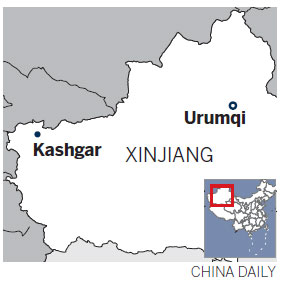
In 2010, the central government decided to establish a Special Economic Zone in Kashgar city in the Xinjiang Uygur autonomous region. The hope is that the city, which has a population of 700,000 - 79 percent of which are members of the Uygur ethnic group - will be able to replicate the success of Shenzhen, China's first and still most-successful SEZ, in the country's less-developed western region.
In the short space of 30 years, Shenzhen, which lies immediately to the north of Hong Kong, was transformed from a fishing village into one of China's wealthiest cities. As part of a pairing assistance program, many of the experts who laid the foundations of that transformation will also be on hand to provide assistance and guidance to the developers in Kashgar.
Bridging the divide
Kashgar prefecture, which includes Kashgar city, is set to become a bridge connecting China with eight countries, including Tajikistan, Afghanistan, Pakistan, and Kyrgyzstan via five land ports. Kashgar city, an important international business hub since the days of the ancient merchants route known as The Silk Road, will become China's only inland SEZ when the preparatory work is completed in 2015.Xinjiang hopes to prove that the west is best
Currently, about 95 percent of the goods that pass through the land ports, in the prefectures of Kashgar and Kizilsu Kirghiz, are Chinese-made export items, such as daily necessities, household appliances and machinery, said Xu Gang, deputy director of Kashgar Prefecture's Port Administration.
Since President Xi Jinping proposed the establishment of the Silk Road Economic Belt in 2013, Kashgar city has been positioned at the forefront of a policy to open up to Eurasian countries, a status helped by the fact that the Pakistan-China economic corridor also begins in the city, according to Mutalif Wubuli, the commissioner of Kashgar prefecture.
In 2013, during a speech in Kazakhstan, Xi proposed that China and the Central Asian countries should build an "economic belt along the Silk Road", a trans-Eurasian project that would target more than 3 billion people and represent the single biggest market in the world - one with unparalleled potential.

Alibaba targets farmland in new project

China's e-commerce giant Alibaba Group Holding Ltd has launched a new project under which farmers can rent out their land online to the company to grow crops, according to Xinhua news agency.
The platform, which has been launched by Alibaba and Zhejiang Xinghe E-commerce Co, will consolidate the cultivated land under an agriculture cooperative. Users of Taobao, an online shopping website, can receive goods from the land that they have subscribed to from the e-commerce company. Apart from the rent the farmers will get, they can also receive salary from the agricultural cooperative if they participate in production.
At present, more than 26.67 hectares of cultivated land has been subscribed by Taobao users. This project, which started in March, began in Jixi, Anhui Province.

Source: ChinaDaily


Architecture: Skyscraper competition winners offer New York population solutions

For its Living Cities competition, Metropolis magazine asked participants for solutions to the housing crisis facing New York. According to the magazine, the city is expected to gain a million more residents by 2040, placing a strain on housing and transport. The winners have now been announced, and include a twisting tower on the High Line and a multi-transport, entertainment and residential hub.
The competition sought designs that were based within the five boroughs of New York, that incorporated a 30-40 story residential tower and that included an, "innovative structural steel system." Participants were also asked to consider sustainability, multi-use strategies, lifestyle amenities and multi-generational design.
Vivo is one of the winners of the Living Cities competition
Vivo was designed and submitted by Andrew Duffin and NBRS+Partners. It reworks the concept of New York's High Line, a redevelopment of the West Side Line railroad that was opened in 1934 before falling into disuse and which has spawned similar projects in places such as Sydney. The concept "engulfs" the High Line and extends it vertically.
"It's a hybrid structural system where the triangulated diagrid system acts as an exoskeleton providing lateral stability and vertical support," explains the Vivo team. "This frees the internal space from needing internal intermediate structure allowing ultimate flexibility for remodeling or use changes over its lifespan. VIVO is alive and responds to the daily and seasonal energy of NYC."
Urban Alloy is a multi-transport, entertainment and residential hub
The second winner was designed by Chad Kellogg, Matthew Bowles and Nina Mahjoub of AMLGM. Urban Alloy is a huge road and rail transport interchange, with the sprawling steel tendrils of the structure appearing to suck in the surrounding train lines and freeways proving a central connecting point for people across New York. In addition to the transport hub, the building also houses residential units and entertainment spaces, made easily acccessible by the transport links.
"Unlike concrete structures that benefit from a very regular floor to floor height because of the need to reuse formwork, steel structures can efficiently be constructed with each unique member cut by an automated system," explains the Urban Alloy team.
Source: Gizmag

-German industry sees "irreparable damage" from Russia sanctions

Europe's showdown with Moscow over Ukraine is already having a major impact on German business in Russia and imposing economic sanctions would cause lasting damage to industry, a confidential paper sent to the German government by a business lobby warns.

The paper from the German-Russian chamber of foreign trade, a group representing 800 companies that provides support to German firms operating in Russia, underscores the extent of concern among German businesses over the Ukraine crisis.

It also suggests industry is stepping up efforts to dissuade Chancellor Angela Merkel's government from pressing ahead with tougher sanctions.

Merkel has warned of more punitive measures against Russia if a presidential election in Ukraine, scheduled for May 25th, is disrupted.

"The growing destabilisation of Ukraine and the diplomatic tug-of-war for a common solution are already having a massive impact on German business in Russia," the two-page "position paper" dated May 7th warns.

"Deeper economic sanctions would lead to a situation where contracts would increasingly be given to domestic firms, projects would be suspended or delayed by the Russian side, and Russian industry and politicians would turn to Asia, in particular China," the paper says.

It says the loss of market share for German and European firms would be "long-term and sustainable", causing "irreparable damage" to Germany's competitive position in Russia.

The paper says this would lead to job losses in Germany and would leave companies vulnerable to "massive compensation" claims if they were forced to break contracts with Russian counterparts.

Source: Reuters

Italy's Renzi says no corrective budget after GDP fall

Italian Prime Minister Matteo Renzi excluded the possibility on Friday of a new cost-cutting corrective budget after economic growth unexpectedly fell in the first quarter of the year.

Renzi, speaking on a morning radio talk show, said the budget had already been passed and that he did not expect further measures. He said Italy must move ahead with more measures to stimulate the economy, which came out of recession last year but remains fragile.

Preliminary estimates from statistics office ISTAT on Thursday showed gross domestic product fell by 0.1 percent in the first three months of the year from the previous quarter and by 0.5 percent from the same period a year earlier

That contrasted with estimates from 27 analysts polled by Reuters, who forecast a 0.2 percent quarterly rise and a 0.1 percent annual fall.

Source:  Reuters

French government announces tax relief as euro election looms

French Prime Minister Manuel Valls, struggling to win back disgruntled voters, said on Friday his government planned to exempt a further 1.8 million households from income tax, at a cost to the state of 1 billion euros ($1.4 billion).

Valls, whose Socialist Party trails opposition parties in voter polls ahead of the May 25 European Parliament elections, said the move would take effect later this year and was aimed at restoring the dwindling purchasing power of consumers.

"It's one billion euros less in tax, one billion euros more in purchasing power for the French, especially the poorest," Valls said on Europe 1 radio.

"It will in large part be financed by clamping down on tax evasion," he said, adding that the government had already budgeted in 500 million euros to help cover costs of the move.

The tax relief may well add to France's already strained public finances as President Francois Hollande struggles to live up to a promise to cut its public deficit to an EU-agreed limt of three percent of economic output next year. That deadline itself was pushed back by two years.

The Socialist government is looking to make 50 billion euros in budget savings over the next three years which are key to keeping the deficit-reduction plans on track.

The International Monetary Fund warned on Thursday that the deficit targets could come under threat if the savings drive gets watered down while the government extends tax cuts to consumers and companies. 

The French central bank said last month the government had to make sure there was no lag between cutting taxes and reining in spending that could endanger the fiscal targets. 

The tax relief for households comes on top of 30 billion euros in payroll tax that the government plans to phase out in the next three years as part of a push to help French companies regain their competitiveness internationally.

Economy Minister Arnaud Montebourg said that at a time when companies were seeing their tax burden eased, it was a question of "social justice" to also help out consumers.

However, the move may also prove electorally astute with opinion polls suggesting that Hollande's Socialists may come out behind both the far-right National Front and the conservative UMP party in the EU parliament elections.

Hollande's government, reshuffled at the start of April after heavy Socialist losses in local elections, is seeking to counter charges by the UMP and National Front that it has pushed taxes higher but failed to reduce a high jobless rate, revive the economy or halt France's industrial decline.

In addition to the income tax relief, the government has sought to defuse anger among state-employed teachers - a major source of votes for the left wing - by pushing back the day teachers must return to work after summer vacation.

Accused by some opponents of surrendering France's trading power and industrial ownership, the government revealed plans on Thursday to expand its veto power over foreign purchases of French firms, extending a list of sectors where it has a say on the grounds that they are strategically sensitive.

Source: Reuters

Modi’s Victory and India’s Change Election

    The WSJ reports,"more than half a billion Indians, a record 66 percent of eligible voters, cast ballots at some 930,000 polling places. Results released Fridayshow the conservative Hindu nationalist Bharatiya Janata Party (BJP) and its controversial leader, Narendra Modi, on course to win more than half the seats in parliament, the first time in 30 years a single Indian party has won enough seats to rule without coalition partners.
India’s 60-year-old democracy may be young compared with the United States–the world’s oldest–but there are parallels between this election and Barack Obama’s first presidential victory.
Both Mr. Modi and Mr. Obama hugely appealed to young voters and ran on a message of change, expanding economic opportunity and making government more responsive.
Indians desperately want economic growth and have grown frustrated with the corruption and incompetence of the ruling Congress Party. Some think tanks have rated this parliament the least productive in India’s history.
And so Indians turned to Mr. Modi, a charismatic campaigner with a compelling story. Born to the lower caste, he is a former chaiwalla (tea seller). In 12 years as chief minister of the western state of Gujarat, he developed a reputation for getting results and fostering economic development, job creation and improving infrastructure.
But Mr. Modi is feared by many Muslims for his alleged role in riots in 2002 in which more than 1,000 mostly Muslim people were killed in Gujarat. He has denied allegations that he did nothing to stop the violence but was denied a U.S. visa in 2005 over the issue".

Portugal exits bailout poorer and long way from recovery

On Saturday, Portugal becomes the second euro zone state after Ireland to exit a bailout, having stuck to the European Union's recipe of belt-tightening to beat the euro zone crisis.

The 78-billion-euro rescue programme the EU and the International Monetary Fund assembled in 2011 for the nearly bankrupt country will formally conclude with Portugal's budget in much better shape and borrowing costs at eight-year lows.

But a shock 0.7 percent drop in its GDP in the first quarter points to the risks inherent in an economic recovery plan which, by focusing on fuelling export growth by cutting labour costs, has become dependent on volatile foreign demand. [ID:nL6N0O139Y]

That data, released on Thursday, also illustrated how far the country is from a lasting economic recovery.

Portugal's central bank highlighted the challenges, saying progress under the bailout was insufficient, and ensuring sustained growth and getting banks lending again would require further reforms.

But as a government no longer dependent on aid looks anxiously ahead to an election in 2015, these may fail to materialise.


INTERNAL DEVALUATION

For those who have lost their jobs or seen their pensions or their salaries cut, life in a post-bailout world raises painful questions: Were the reforms worth it and will they ever deliver enough growth for jobs and better living standards?

Further south in the industrial city of Setubal - one of Portugal's poorest and plagued by high unemployment - there is little evidence of the growth that, before stalling, had returned to the country in the second quarter of last year.

"Levels of poverty keeps getting worse, especially among people aged 25-40 who lost their jobs," said Constantino Alves, a priest who runs a "Social Restaurant" charity for the poor.

"We get young couples, parents with children seeking meals and aid. There are various small entrepreneurs who had shops here and are now in utter poverty, eating here. Many have lost all faith to find jobs. It's a crisis of confidence," he said.

The problem, say economists, is that reforms already implemented during three years of wrenching recession and austerity will only have a delayed impact.

"These are political economies that are very difficult to reform. The only way to change is incrementally," said Antonio Barroso, senior vice president at the Teneo Intelligence consultancy in London.

The government has made it cheaper for firms to hire and fire. That has lowered the cost of doing business and helped bring unemployment down from its 2013 peak of 17.5 percent.

But many observers say that because austerity during the bailout focused overwhelmingly on cost-cutting - like public sector wages and pensions - and tax hikes, deeper reforms that would have reduced the size of the state or made the economy even more export-oriented have not taken place.

"The (bailout) adjustment programme was basically based on internal devaluation," said Antonio Costa Pinto, political analyst at the University of Lisbon.

That has pleased the creditors. Labour costs in Portugal fell eight percent since 2011 to 11.6 euros per hour in 2013, according to EU statistics agency Eurostat. That brought competitiveness gains, with the value of exports rising to 41 percent of GDP last year. 
But the European Commission has said that after wages fell around 5 percent between 2010 and 2013, Portugal is still only half-way to getting pay down to levels that could tangibly reduce unemployment.

"Portugal's challenges remain the same," said Costa Pinto, pointing to the need for further competitiveness gains.


'DESPERATE FOR GROWTH'

That creates a dilemma for a government that will want to give voters some hope before next year's national election.

"This government is looking like it is desperate to go for growth," said Nicholas Spiro, managing director at Spiro Sovereign Strategy in London.

"...It is still a job half done. The danger is that the reforms grind to a screeching halt, there is a very high risk that that happens."

With government bond yields at record lows, market pressure to persist with tough economic reforms has evaporated.

And now that its lenders from the Commission, European Central Bank and IMF have stopped reviewing the economy, the country can change policies more freely, even if still needs to gradually reduce the budget deficit under EU rules.

The government has already said it will partly reverse salary cuts in the public sector in the next few years and it is considering cutting taxes next year. 

"I don't think there is an incentive to continue pushing reforms," said Teneo Intelligence's Barroso. "I think the pressure to cut taxes before the election is huge."

Perhaps that will give a push to growth in the short term, but will it help generate the high growth necessary to sharply reduce Portugal's high debts at around 125 percent of GDP? Or to create jobs for those outside the few fast-growing sectors?

Back in Almada, Capelo still hopes thing can improve.

"At least we still have hope that the data will one day transform into real improvements," she said. "I want to try and get a bank credit this year for the business."

But bank loans to firms and individuals are continuing to decline, dropping to 240 billion euros in February, their lowest since 2007, according to the Bank of Portugal.

"Getting loans from banks is the big problem even for companies that have managed to survive. There are no loans, so it's difficult to buy new merchandise, not to mention expand," said Anabela Sharamia, vendor in a furniture shop in Setubal.

Source: Reuters

EU Peripheral bonds deepen losses amid Greek tax and political fears

Lower-rated euro zone bond prices slipped on Friday, deepening sharp falls on Thursday triggered by nervousness about the stability of the Greek government, a tax on foreign holders of Greek bonds, and weak growth.
The rally in peripheral government bonds had been fairly steady since the start of the year, but some analysts suggested the reversal might be more than a blip.
"There will be some investors that are concerned, and should take into consideration that is not just a one-day movement but something more prolonged," said Daniel Lenz, strategist at DZ Bank.
The yield on Greek 10-year government bonds <GR10YT=RR> was up 4 basis points at 6.87 percent, following a jump of over half a percentage point on Thursday.
Italian , Portuguese and Irish  10-year bonds also rose 4 bps, to 2.73, 3.75 and 3.12 percent respectively, while Spain's were 1 bp higher at 3.02 percent.
Thursday's price falls were largely attributed by traders to a Greek government circular detailing capital gains tax that would apply to non-resident holders of Greek debt between 2012 and 2013.
Greece's government said the document had only sought to clarify that the previous tax regime of 33 percent on foreign legal entities and 20 percent on individuals had been abolished in 2014, although it later withdrew the document.
Strategists said the Greek tax regime could have implications for how governments, desperate to balance their widening budget deficits, may look for future private sector contributions. Italy was quick to deny that it had any plans for a retroactive tax.
"The price action was very telling ... it just showed how fast such a stampede can be generated to avoid any such confiscatory actions," said KCG strategist Ioan Smith.
Others pointed out that double taxation agreements in Europe would exempt many investors from such a tax, adding that the shift in market sentiment was more likely a response to Greece's fragile political situation ahead of European elections.
Expected gains for Greek eurosceptic parties in next week's election might erode domestic support for the ruling coalition and potentially trigger a general election.
In addition, EU economic growth came in much lower than expected on Thursday, weighed down by shrinking output in Italy and Portugal.
The slowdown is increasing pressure on the European Central Bank to ease monetary policy further, with markets now broadly expecting its June meeting to introduce a package of policies, including cuts in all its interest rates and targeted measures aimed at boosting lending to small- and mid-sized firms. 
Until that materialises, strategists say peripheral yields may continue to edge higher. Ireland, however, could get a boost later on Friday, with Moody's scheduled to review it

Source: Reuters

Two deals Alibaba could strike in America

Alibaba boss Jack Ma is busy preparing for a U.S. initial public offering, potentially valuing his company at more than $100 billion. But if he really wants to make it big in America, he may have to buy his way in. There are at least two deals he could strike. Buying Yahoo would tidy up some corporate and tax-related loose ends as well as providing a U.S. bridgehead. The stronger industrial logic, though, could eventually suggest a tilt at eBay .

Ma's goal early on was for Alibaba to become a top-10 internet firm and last 102 years. In 2011, he hinted at interest in Yahoo. At the time, Alibaba wanted to reduce foreign ownership and Yahoo's valuation was depressed. The U.S. search firm's stake is now smaller and its stock richer. Ongoing efforts to make acquisitions in China and take small stakes in U.S. companies with relevant technology, along with going public, may mean Ma has enough on his plate without the financial and political risks of a big American transaction.

Yet making it big in the United States as well as China could well require a trusted U.S. brand. Moreover, Yahoo has a problem. When it sells shares in Alibaba, the Internal Revenue Service takes perhaps 30 percent of the proceeds. Yahoo's current roughly 23 percent stake could be worth $27 billion before tax at a $120 billion valuation for Alibaba. Avoiding a tax hit approaching $10 billion altogether would be a big deal for a company whose own market capitalization is $34 billion.

If Alibaba bought Yahoo, in essence buying back the U.S. company's stake, the tax treatment could be far more favorable. Ma might also gain an extra housekeeping opportunity. Yahoo's other big Asian holding is Yahoo Japan <4689.T>, a joint venture with Masayoshi Son's SoftBank <9984.T>. Some kind of exchange involving that stake and SoftBank's 34 percent of Alibaba could one day help Ma reduce his other big foreign shareholding too.

Yahoo's mostly stagnant business is less compelling. Strategically, Ma's more natural U.S. target would be the $65 billion eBay, with its auctions and e-commerce – and even the PayPal business to go along with Alibaba's sister company Alipay. That would, of course, be a huge bite even if Alibaba's IPO turns out to be a blockbuster. But for Ma to go after his biggest inspiration would surely not be out of line with his ambition.


Source: Reuters

Brazil's economic activity slips in March -central bank

Economic activity in Brazil dropped slightly in March on weaker industrial output and retail sales, central bank data showed on Friday, capping a frustrating first quarter for Latin America's largest economy.

The Brazilian central bank's IBC-Br economic activity index dropped 0.11 percent in March from February in seasonally adjusted terms, the bank said on Friday, in line with expectations in a Reuters poll.

The index, a rough proxy for gross domestic product, dropped a non-seasonally adjusted 0.09 percent over the same month a year ago. It pointed to 0.3 percent growth in the first quarter from the end of last year.

March's surprise drop in retail sales dragged activity down as rising inflation and tighter credit ate into consumers' pockets. Industrial output also fell in that month as factories sought to cut back on unwanted inventories.

Brazil's economy has struggled with weak growth and high inflation since 2011 despite countless attempts by the government of President Dilma Rousseff to boost activity through stimulus measures. The country's economy grew just 2.3 percent last year and is expected to slow further in 2014, according to private estimates.

The IBC-Br index, a gauge of activity in the farming, industrial and services sectors, has proven to be an imperfect barometer of official GDP data compiled by statistics agency IBGE, which provides a broader reading of economic activity.


Source: Reuters

Bill Gross: Drop in Bond yields reflects expectations of a lower Fed lending rate

The rally in U.S. Treasurys that pushed 10-year yields to their lowest level in nearly seven months reflects the likelihood that the Federal Reserve will keep rates low in a slowly growing global economy, according to Bill Gross, chief investment officer at Pimco.
The 10-year note 10_YEAR +0.60%  yield, which falls as bond prices rise, dropped more than 15 basis points to 2.50% in the past three sessions. That move is emblematic of the way interest rates should behave as the world shifts toward the “new neutral” paradigmoutlined by Pimco earlier this week, the bond market veteran told MarketWatch in emailed comments.
“2.50% currently reflects a 0.5% new neutral rate and seems fair for now,” Gross said.
The new-neutral outlook published by Gross and Pimco adviser Richard Clarida suggests that the global economy is transforming from a period of recovery after the financial crisis — termed the “new normal” back in 2009 — toward stability that is characterized by modest economic growth over the next three-to-five years.
With economies expanding more slowly than they did prior to the financial crisis, central banks are likely to keep their key interest rates low, cushioning lending rates from a sharp rise. In the U.S., the fed funds rate is currently anchored near zero, with many traders expecting it to begin rising in the middle of next year . But Gross suggested yields will be dictated by how high the Fed eventually hikes rates. It may stop at a lower point than it did in past rate cycles.

GLOBAL MARKETS-Shares fall for third day on growth worry

Global shares eased for a third day on Friday, on course for their longest losing streak in over a month, and yields on some lower-rated euro zone bonds rose as a gloomier economic picture in Europe led investors to shed riskier positions.

Weaker-than-forecast GDP figures from euro zone countries such as Italy, France and Portugal on Thursday challenged market expectations for an economic recovery in the bloc, which have boosted shares and lower-rated bonds in the region since last summer.

Sharp sell-offs in U.S. indexes, which were set to fall for a third consecutive day, and Japanese shares and a decline in safe haven Treasury yields strengthened the feeling global investors were starting to question a 20 percent rally in global shares since June 2013, which propelled a key world index to 6-1/2 year highs earlier this week.

"There’s a general rotation and fall in risk appetite," said Andrew Parry, chief executive officer at Hermes Sourcecap, which manages 2.4 billion euros ($3.3 billion) worth of assets.

"In Europe...GDP figures yesterday show the recovery is quite modest so far."

The MSCI All-Country World index <.MIWD00000PUS> was down 0.2 percent, falling for a third day and further retreating from 418.24, a high touched on Thursday and previously not seen since Nov. 2007.

The index was trading at nearly 15 times its expected earnings for the next 12 months, the highest valuation multiple since 2009, Datastream data showed.

Shares on Wall Street were poised to open lower, with main equity index futures down 0.1 percent .

Greek and Portuguese 10-year government bond yields rose, hit by nervousness around Greek government stability and weaker-than-expected growth data for Portugal.

"There will be some investors that are concerned and should take into consideration that is not just a one day movement but something more prolonged," said Daniel Lenz, strategist at DZ Bank.

Italian , Spanish and Irish bond yields reversed early advances to trade slightly lower.

Yields on benchmark German bonds , regarded as a safe-haven asset due to the country's strong economy, hovered close to a one-year low while the euro consolidated just above a 2-1/2-months trough against the dollar.

In commodities, gold struggled below $1,300 an ounce after U.S. jobs and factory data indicated brighter prospects for that economy, hurting the metal's appeal as an investment hedge.
Nickel prices rose on Friday, shaking off steep losses from the previous two sessions as investors refocused on shrinking supplies, while copper prices were on track to post their biggest weekly gains in nearly two months on robust demand.

Brent futures rose above $109 a barrel on Friday as tension over Ukraine kept investors on edge, although a gradual return of Libyan oil supply capped gains.


Source: Reuters

Acampora’s ‘sick feeling’ about stocks: Nasdaq could fall 25%

The worst drop in five weeks for the S&P 500  and the Dow industrials and a drive for the Russell 2000 into correction territory has brought out the bears and not just the SALT-y guys in Vegas.
Ralph Acampora, a known stock bull and technical analysis guru, told CNBC on Thursday before markets closed, that he thinks it could get really bad for stocks and that he has a “sick feeling” about what lies ahead.
The director of technical trading at Altaira Investment Solutions predicts the S&P 500, which is up 1.2% for the year so far, will see a 10% drop between now and October. His crystal ball darkens considerably for other indexes
“If you ask me about the Russell  and the Nasdaq Compositeand the S&P MidCap, I think you’re talking about 20, 25%…and I call it a stealth bear market going on,” said Acampora.
He said the “melt-up” that began last December and carried into the first quarter of this year has left stocks like Facebook  and Amazon overextended. That needs to be unwound and markets aren’t even close on that front, he said, saying “it bothered me then, and it still bothers me.”
Source: Marketwatch

Briefing.com: The stock market will be aiming to regroup from Thursday's broad-based selling effort

"The stock market will be aiming to regroup from Thursday's broad-based selling effort, which followed on the heels of some mixed economic data, some nervous-sounding remarks from leading hedge fund manager David Tepper, some weak GDP data out of the eurozone, and another rally effort in longer-dated Treasury securities that dropped the yield on the 10-yr note below 2.50%.

Growth stocks lead the losses in the early going, but by the closing bell it was the blue-chip averages that stood out as the day's weakest performers.  The Russell 2000, which was down as much as 1.9% at one point, battled back to end the day down 0.7% and just above its closing low from early February.  The rebound effort transpired after the early selling pushed the Russell 2000 more than 10% off its high, leaving it in the throes of a technical correction.  Notwithstanding the comeback try, the Russell 2000 still ended the session below its 200-day moving average (1116.73).

The continued weakness in the small-cap stocks, though, looked to have bled into the large-cap issues as there simply wasn't a great deal of buying interest.  Every S&P 500 sector, with the exception of the telecom services sector +0.2%), ended the day lower.

Thus far, there hasn't been a rush to buy the dip.  The S&P futures are off their morning lows, but still remain 0.1% below fair value, suggesting there will be a flattish to slightly lower start on this options expiration day.  The latter is expected to boost trading volume, which has been light for most of the week.  Volume on Thursday's sell-off hit 732 mln shares at the NYSE, which was the heaviest this week and slightly above the recent average.

Not surprisingly, the futures market liked what it saw in the headlines for housing starts and permits. Starts jumped 13.2% in April to a seasonally adjusted annualized rate of 1.072 mln units from 947,000 in March.  The April level is 26.4% above the year-ago level and was ahead of the Briefing.com consensus estimate, which stood at 975,000.

Building permits also produced a positive surprise, rising 8.0% to a seasonally adjusted annual rate of 1,080,000 (Briefing.com consensus 1,008,000).

The offsetting factor in the Housing Starts report is that the bulk of the growth in both starts and permits came from multi-family units, which is a volatile construction sector.  

Permits for single-family units increased just 0.3% to 602,000 while single-family starts jumped 0.8% to 649,000.  Multi-family starts surged 39.6% to 423,000, which is the highest since January 2006. Even so, there is a positive GDP component to the Housing Starts report as the number of housing units under construction rose 2.5%".

The Treasury market's reaction to the starts data was fairly muted.  The 10-yr note was already down three ticks ahead of its release and that is still where it stands, with its yield at 2.50%.  In light of Thursday's big move, added attention will continue to be paid to the Treasury market's behavior as a dictating factor for the stock market.

Popular Posts